

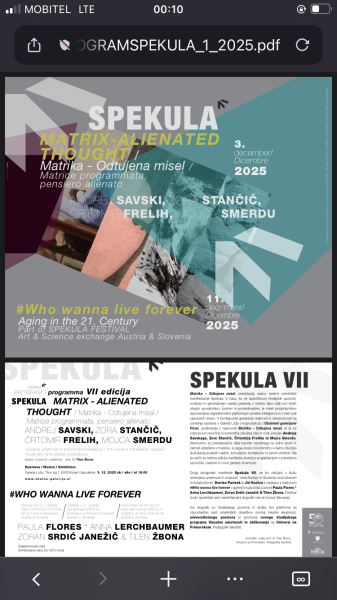
#Who Wanna Live Forever
Aging in the 21. Century
Part of SPEKULA FESTIVAL
Art & Science exchange Austria & Slovenia
Paula Flores & Anna Lerchbaumer
Zoran Srdić Janežič & Tilen Žbona
Curated by Denise Parizek & Jiři Kočica
Open discussion 11.12.2025 5 pm
Vernissage 11.12.2025 7 pm
Duration: 12.12. – 21.12.2025
Galerija Insula in Izola
Insula
Smrekarjeva ulica 20, 6310 Izola
Opening Hours
Monday – Friday 10:00–13:00 & 17:00-19:00
Saturday 10:00–13:00
„Who Wanna Live Forever“ is a unique collaboration featuring Vienna-based artists Paula Flores and Anna Lerchbaumer, along with Zoran Srdić Janežič and Tilen Žbona from Koper and Ljubljana, Slovenia. The project is curated by Denise Parizek (AT) and Jiři Kočica (SI).
The artists explore themes such as demographic change, the aging population, Dorian Gray syndrome, cosmism, life in the age of AI, genetic engineering, and migration. These themes are examined through both daily life in Central Europe and broader global perspectives. The exhibition will debut in Vienna in 2024 and subsequently be showcased in Ljubljana and Koper in 2025.
This exhibition reveals how art and science intersect to reflect humanity’s quest for eternal life. It promises a thought-provoking and engaging experience.
„Who Wanna Live Forever“ highlights issues like demographic change, aging, Dorian Gray syndrome, cosmism, AI, genetic engineering, and migration. The exhibition demonstrates how these topics impact both everyday life in Central Europe and the global community. It features artistic interpretations of scientific processes, performative experiments, and guided tours. Central to the exhibition is the human quest for immortality, explored through historical myths and modern scientific advancements. The aim is to provoke thought and inspire new perspectives on these complex subjects.
This project is supported by the Austrian Cultural Forum Ljubljana, Slowenisches Kulturinformationszentrum SKICA, Galleria Insula.
PICTURES OF THE EXHIBITION
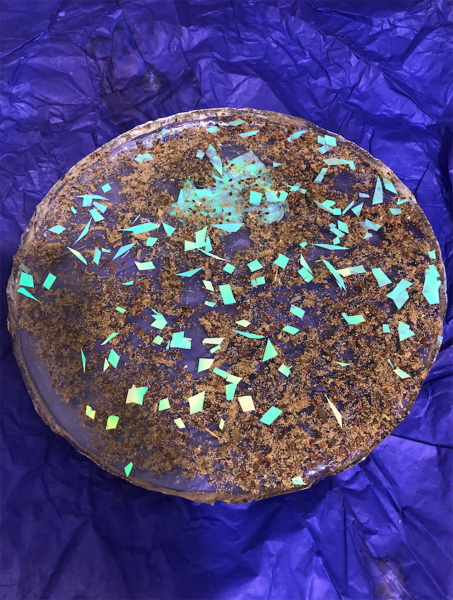
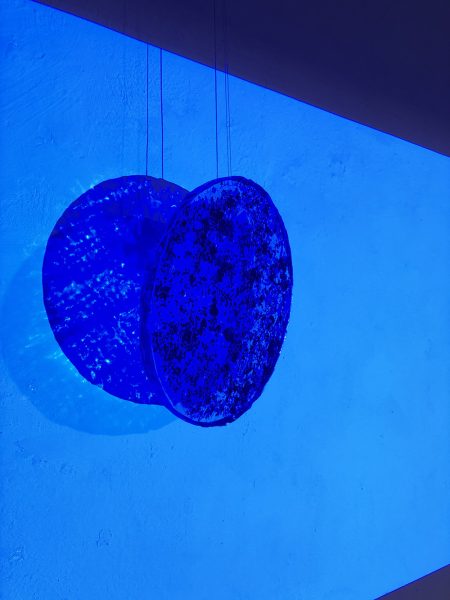
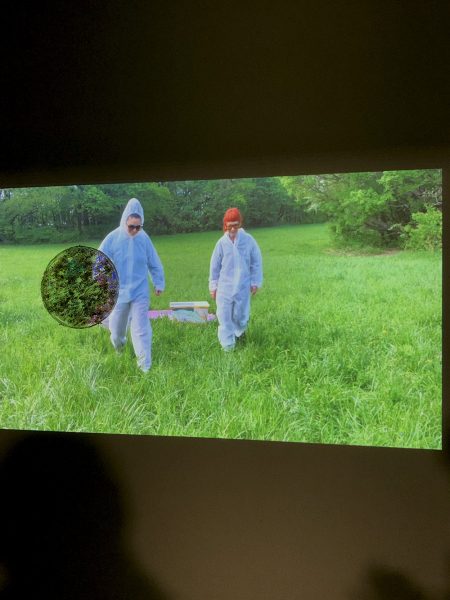
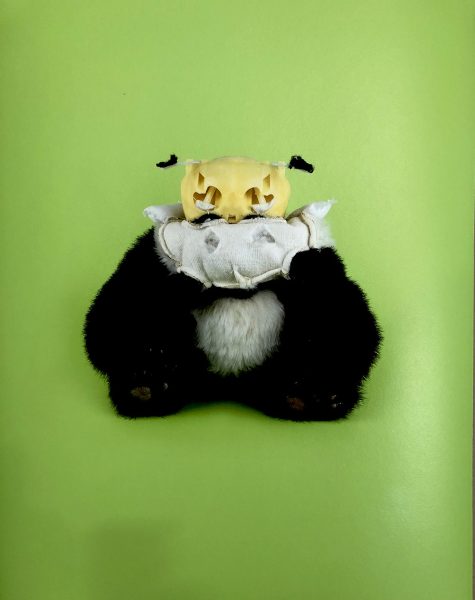
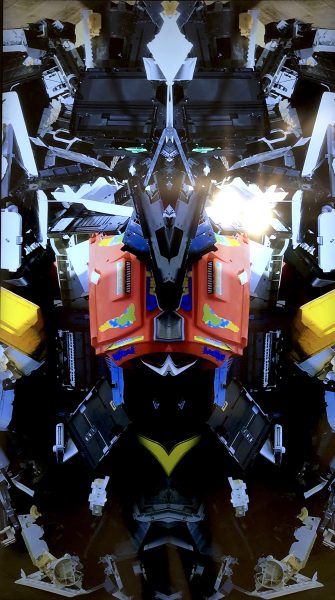
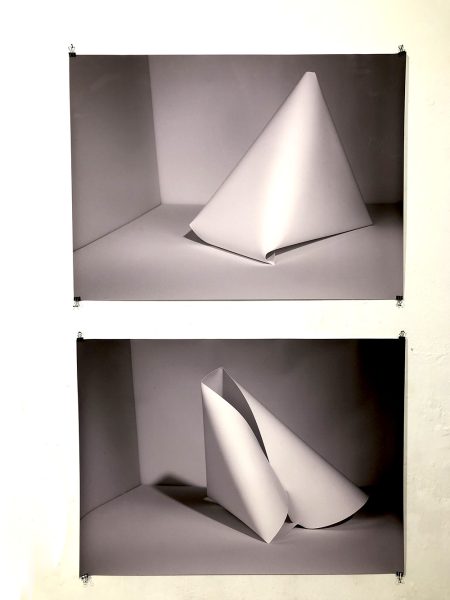
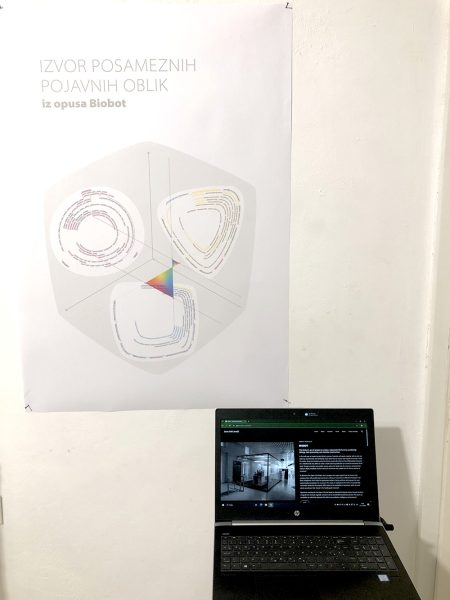
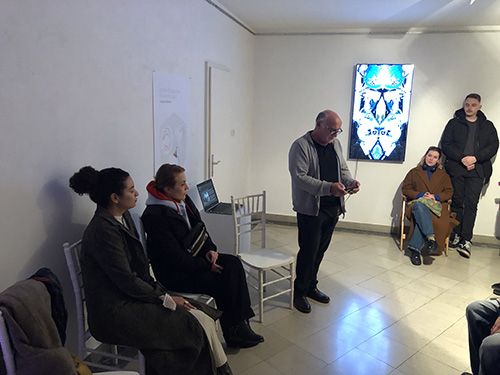
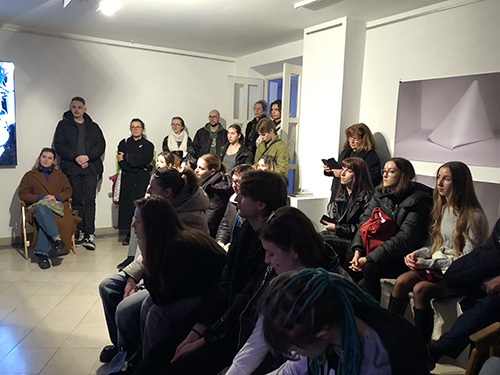
Pictures of the opening
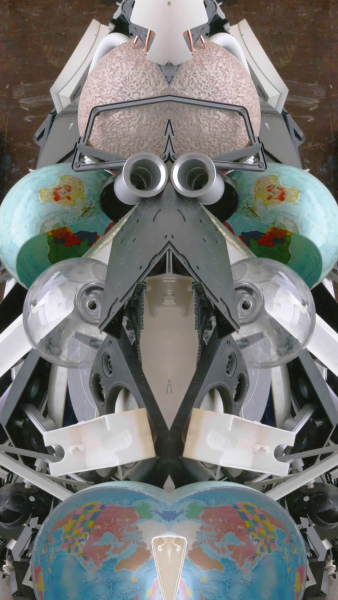
noisy things to last
Video loop 20 min, 4K, HD sound, 2022
Die Arbeit besteht aus einem Video, das kleidoskopartig Aufnahmen von Elektroschrott unter anderem Abspielgeräte und Lautsprechern zeigt. Verdrängte Objekte collagieren sich autopoetisch als Sinnbild für die aufgelösten Hierarchien der gewesenen Konsumobjekte. Die Dinge werden mit hoher Wahrscheinlichkeit die Menschheit überdauern und somit eine Nachricht an das Nachuns sein. Ein Fokus wird auf den Sound gelegt. Die BetrachterIn blickt auf ein stilles Videobild und wird von einem Regen auch Schrott plus dem Noise der dadurch entsteht überrascht. Der Loop zeigt etwas all 2-4 Minuten eine Füllung des Containers. Das Potential des Lärms lässt die Ruhe unehrlich wirken. Die Pausen und der Moment der Überraschung stellt die Geduld und den Komfort der ZuschauerIn auf die Probe. Der Bass macht die Menge spürbar. Eine Archäologie der Klänge des Wegwerfens, Zerstörens und neu Verwendens, vom Rohmaterial zur Müllhalde. Ein schneller Zerfall wird zur beschleunigte Archäologie.
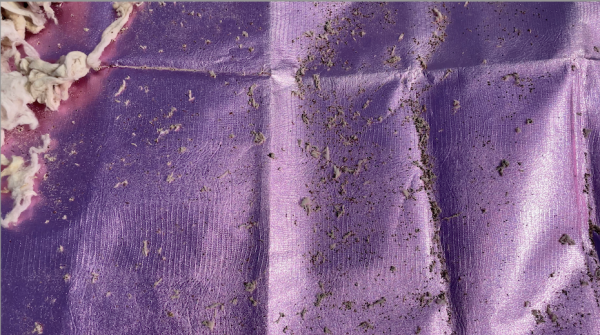
SYNTHETIC MOONS AND MOTH HYSTERIA
Many modern moths show erratic behavior at night. They don’t fly smoothly. They fly in a nonsensical way that gets them nowhere. They fly in circles around what they think is their guide.
Their natural guide is the moon, but now we are surrounded by millions of synthetic moons, also known as lightbulbs. All of them are calling them “COME HERE, COME HERE”.
They become pests because they can’t find their path. They lose their freedom because they get lost.
Paula Flores was born in the bustling border town of Tijuana, Mexico, and grew up in Tijuana and San Diego. She holds a bachelor’s degree in fine arts from the Universidad Autónoma de Baja California and a master’s degree in art and science from the University of Applied Arts Vienna. Flores’ works are part of the permanent collection of the Museum of Contemporary Art in San Diego, USA, the collection of ARTOMI, New York, USA, and private collections around the world. Paula Flores is a storyteller of an archaic, shamanistic nature. But she is anything but esoteric; she is rooted in the traditions of her ancestors and transmits ancient knowledge into our time. Her installations are composed of a kind of modules, adapted and interpreted to suit the theme and the space. She uses stones, branches, plants, bacteria and fungi as signposts and storytellers about the history of the world and the symbiotic relationships that had to be established and kept in balance for the existence of what we know as nature. Paula Flores urges herself to abandon the concepts and convenience of either/or.
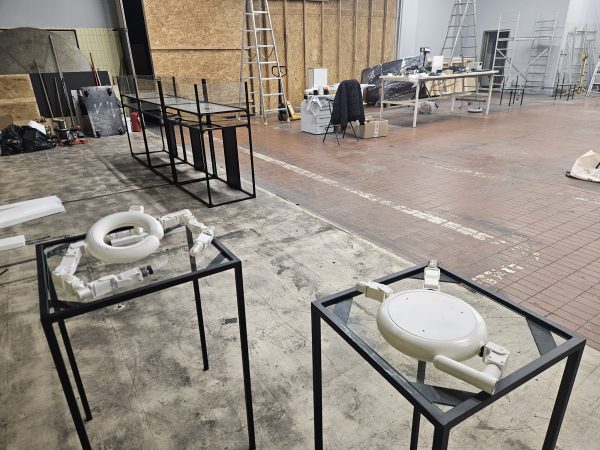
Medauroidea extradentata – 1 leg links + one link: head and body
Zoran Srdić Janežič will present a lecture performance from the Biobot opus. Biobot is a multi-year process of creating a cybernetic being that intertwines the organic and the technical. The project develops a form of hybrid intelligence in which in-vitro neural cultures merge with artificial intelligence that generates robotic structures, movements, and behavioral responses.
The system combines several layers of intelligence: neural impulses from the cell culture, algorithmic body design through RoboGrammar, and emergent motor strategies formed through DIAYN. Together they create a new, singular entity — a non-human actor, in which the artist’s role shifts from author to caretaker of a developing hybrid being.
The lecture performance introduces these conceptual foundations and the transition from an artistic object to an entity with its own agency.
Zoran Srdić Janežič is a sculptor, intermedia artist and puppet designer at the Ljubljana Puppet Theatre.
In his work he employs new materials and technologies, like animatronics, moving mechanisms in conjunction with biological materials, 3D virtual design, virtual reality installations with AR codes, sculptural work combining different materials and technologies.
In the development of artistic projects, he collaborates with experts in the fields of programming, artificial intelligence, biotechnology, nanotechnology, i.e.. He lives and works in Slovenia and international and was participating at the Ars Electronica Festival in Linz, Bozar in Brussels, Centquatre in Paris.
Some of his sculptures are part of the permanent collections of prominent galleries. He won an open call by the Municipality of Ljubljana and created a public monument in the city center. His sculpture work was awarded a prize at the international festival in Kranj and in 2020 he was selected for the S+T+ARTS residency program.
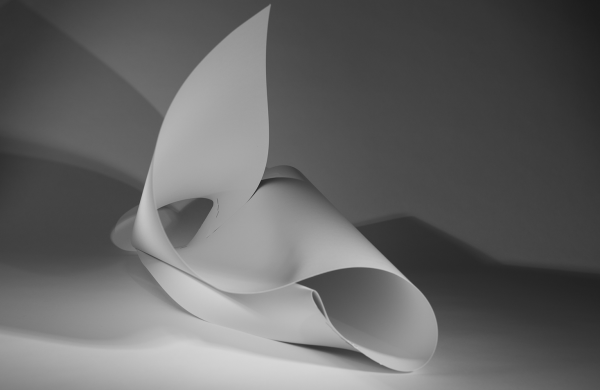
He shows the development of sound scanning of an object and visualization of this process in a digital environment. Reflection on its connection, on one hand, with de Broglie’s idea that matter is also wave-like, and on the other hand, with the fact that waves strongly influence living matter (e.g., cell formation and arrangement in living substances).
Tilen Žbona lives and works in Koper where he has founded the art&science department at the University of Koper. He graduated in painting at the Academy of Fine Arts of Venice under the guidance of Professor Carlo di Raco and obtained the master in New Media at the Academy of Fine Arts and Design of the University of Ljubljana with Professor Srečo Dragan. In 2012 he received an official award for his works from the University of Ljubljana, and since 2015 is member of the Artistic Commitee for the Slovenian Rectors Conference. In 2017 he achieved his Ph.D in Educational Science at the faculty of Social Pedagogy of the University of Ljubljana, under the guidance of Dr. Beatriz Gabriela Tomšič Čerkez and Prof. Dr. Franc Solina. He is associate professor at the faculty of Education of the University of Primorska. He took part to numerous national and international festivals, such as: Pixxelpoint, Nova Gorica (Slovenia), Istanbul Biennial (Turkey), ArtNetLab & Le Génie de la Bastille, Paris (France).
Cover image Anna Lerchbaumer
Powered by
