Behind the Pavilion
Hubert Hasler Soloshow
Curated by Denise Parizek
Vernissage 1.10.2026
Duration 2.10. – 26.10.2026
The Art of Economy and Habits in the Works of Hubert Hasler
Based on the idea of philosophy of ecology Hubert Hasler addresses his actual questions in his art works. He presents a different perspective and a multi leveled possibility of interpretation into the environmental ethics. The aim of the philosophy of ecology is to clarify and critique the ‘first principles’, which are the fundamental assumptions present in science and the natural sciences. The idea that living and non-living beings are related and interconnected components in the biospherical web. It is essential to understand the system of the biosphere and the components as a whole and complex field. But his view isn’t romantic like in Henry David Thoreau Walden or the French philosopher Jean-Jaques Rousseau. Hasler is aware of the absolute importance of the issue and the intransigence of large companies and corrupt politicians. He subversively weaves socio-political themes into the topic of nature, such as xenophobia in the neophyte project #overrun, authoritarian politicians in, and the danger of AI optimisation in Beauty never dies.
The exhibition Behind the Pavilion is both a retrospective and a presentation of his latest works, Eurydike, where is the Snake and the video piece I wanna be Tree, which were created in 2026 during a residency in Sinemorets, Bulgaria.
Behind the Pavilion 2024
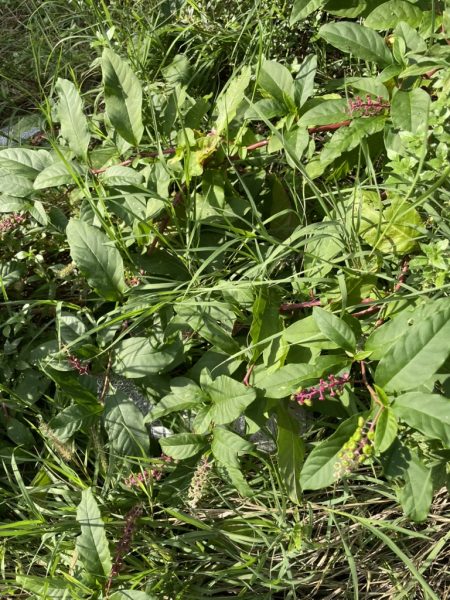
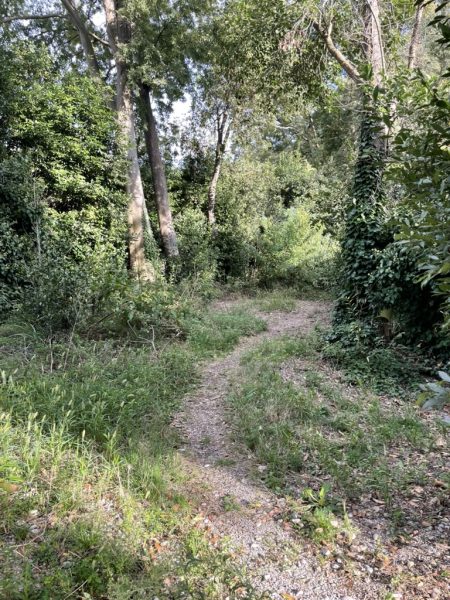
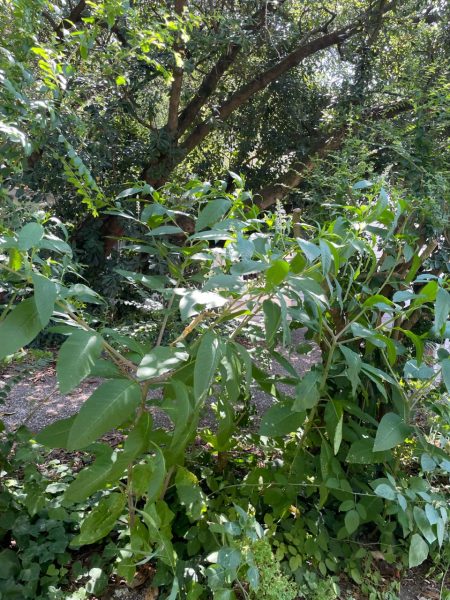
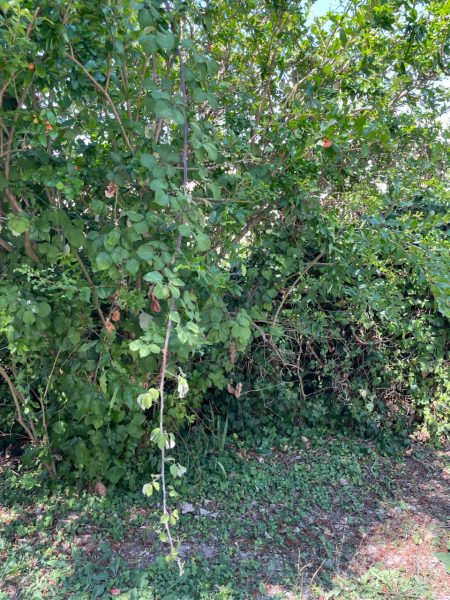
In the eponymous photo series Behind the Pavilion, Hubert Hasler examines the rear sides of the national pavilions in the Giardini in Venice. At the front, nationality is celebrated; behind the pavilions, neophytes grow. The photographs show that two completely divergent perspectives clash, yet remain unseen. When they do become visible, they serve as a visualisation of the status quo.
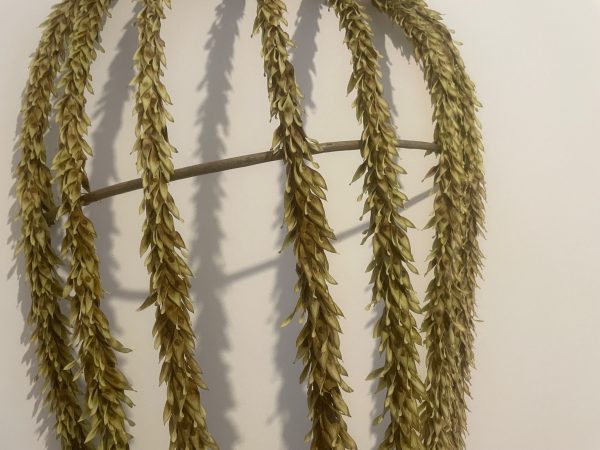
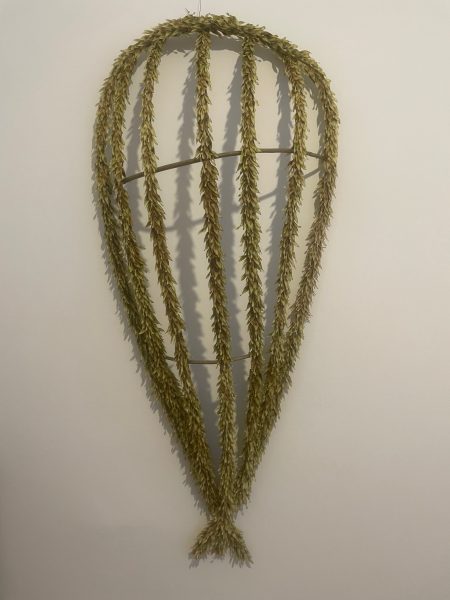
He has also created the sculptural work seed shields especially for the exhibition in Timisoara/Meta Spatiu, which explores Romanian customs and pays homage to the city where we have both had the pleasure of enjoying many wonderful exhibition experiences.
The exhibition comprises photographs, videos, installations, sculptures and a performance at the opening.
In all his works, Hubert Hasler explores the theme of nature in its various facets, such as abuse, extinction, climate change and exploitation. He uses nature-related themes as a metaphor for social criticism. Hubert Hasler deconstructs established norms. Trees (I wanna be a Tree, video work) sway in the wind, shed their leaves and allow their seeds to be dispersed by wind and water, yet they cannot move of their own accord. By mobilising what is supposedly fixed, Hubert Hasler alters our familiar perspective and shifts the boundaries of the periphery.
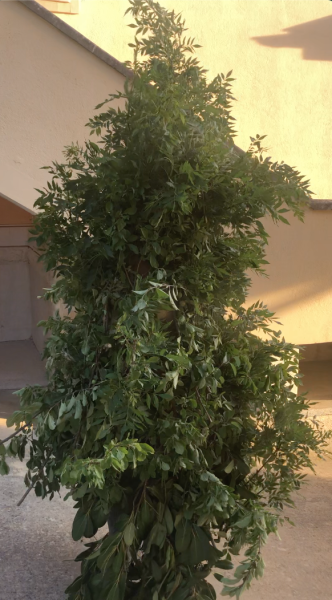
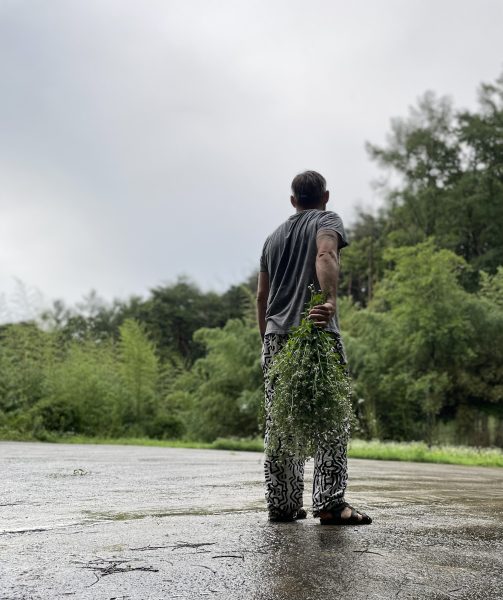
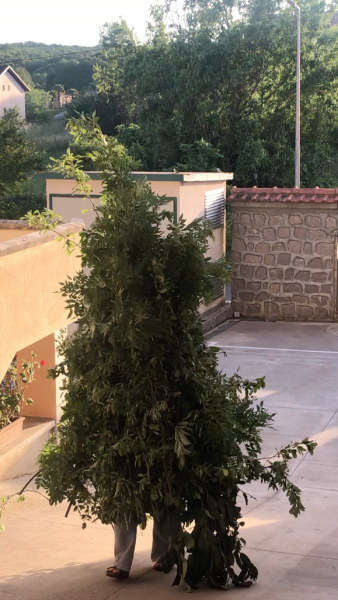
In his performative photography and film series I wanna be a Tree, Hubert Hasler draws on the Bulgarian tradition of the Kukeri. At the annual SURWA Festival in Pernig, winter is driven away by hairy superhumans/monsters. In the style of the Kukeri costumes, Hubert Hasler has created a tree costume, in which he roams through natural and urbanised landscapes. Walking trees that explore their surroundings, abandoning their usual steadfastness in favour of mobility. Unlike Thoreau, who retreated into the woods to try out an alternative lifestyle, Hasler transforms himself into a tree. Like the child in Kim de L’Horizon’s Blood Beech, who wishes to become a blood beech to escape his isolation and the lack of understanding from those around him, the tree costume protects the protagonists. (Comments from visitors who slipped into the tree costume during the performance included feelings of security, serenity and well-being). The tree costume is woven from non-native plants. These ‘foreign’ plants, the bane of allotment gardeners, are setting off – quite literally. They were brought here long ago, washed ashore from other cultures, and have adapted – and in some cases assimilated.
Hasler uses nature as a canvas (seed shields, sculptures) for everyday themes. The organically and structurally designed forms, which break away from two-dimensionality, transform into surreal-looking figures that open up new spaces for thought. Hasler addresses both the deformation and partial obliteration caused by trees being displaced or felled to make way for development, and the resulting exodus of many people who are forced to leave their homelands—destroyed by civilisation—in order to find a new place to call home.
We are screening films from the overrun global series set in Korea, Malta and the Maldives, in which Hubert Hasler actively transports non-native plants and transforms them in other locations. The films explore how these non-native plants spread through discoveries and gifts to rulers (in 1814, Tsar Alexander presented Metternich with giant hogweed seeds on the occasion of the Congress of Vienna).

„It all began with a 10-kilo sack of potatoes on a bus from Münster to the North Rhine-Westphalia countryside, which was allowed to travel in its own seat. For over a decade, I have been studying neophytes – plants that are not native to the area. These are plants that establish themselves in their supposed new home mainly through human transport, by collectors, or through landscaping.
The first short film about overgrowth – a car loaded to the brim with Japanese knotweed (Fallopia japonica), which I brought to the studio to create and photograph an installation. In doing so, I am actively contributing to the spread of these plants with negative connotations.
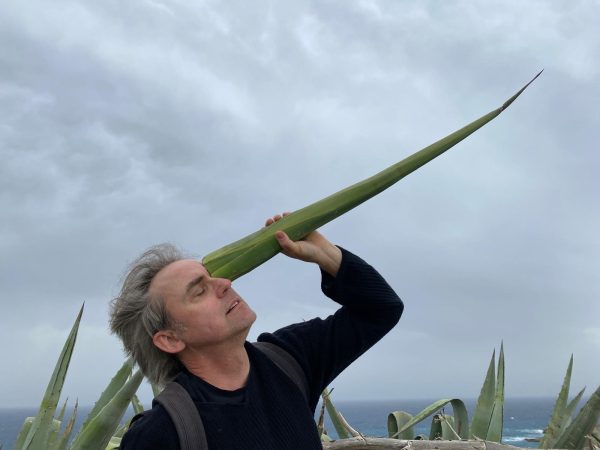
In Malta, I transport agaves (Agave americana) from one place to another; in South Korea, I found black locust trees (Robinia pseudoacacia) in a remote spot near a very old temple; and on Felhidhoo, an island in the Vaavu Atoll in the Maldives, I help damiana (Turnera ulmifolia) to make its way from one island to another, and much more. My overflowing short films bear witness to human activity, accompanied by the unstoppable intermingling and spread of these unwanted plants, symptomatic of a constantly changing society.“
Hubert Hasler
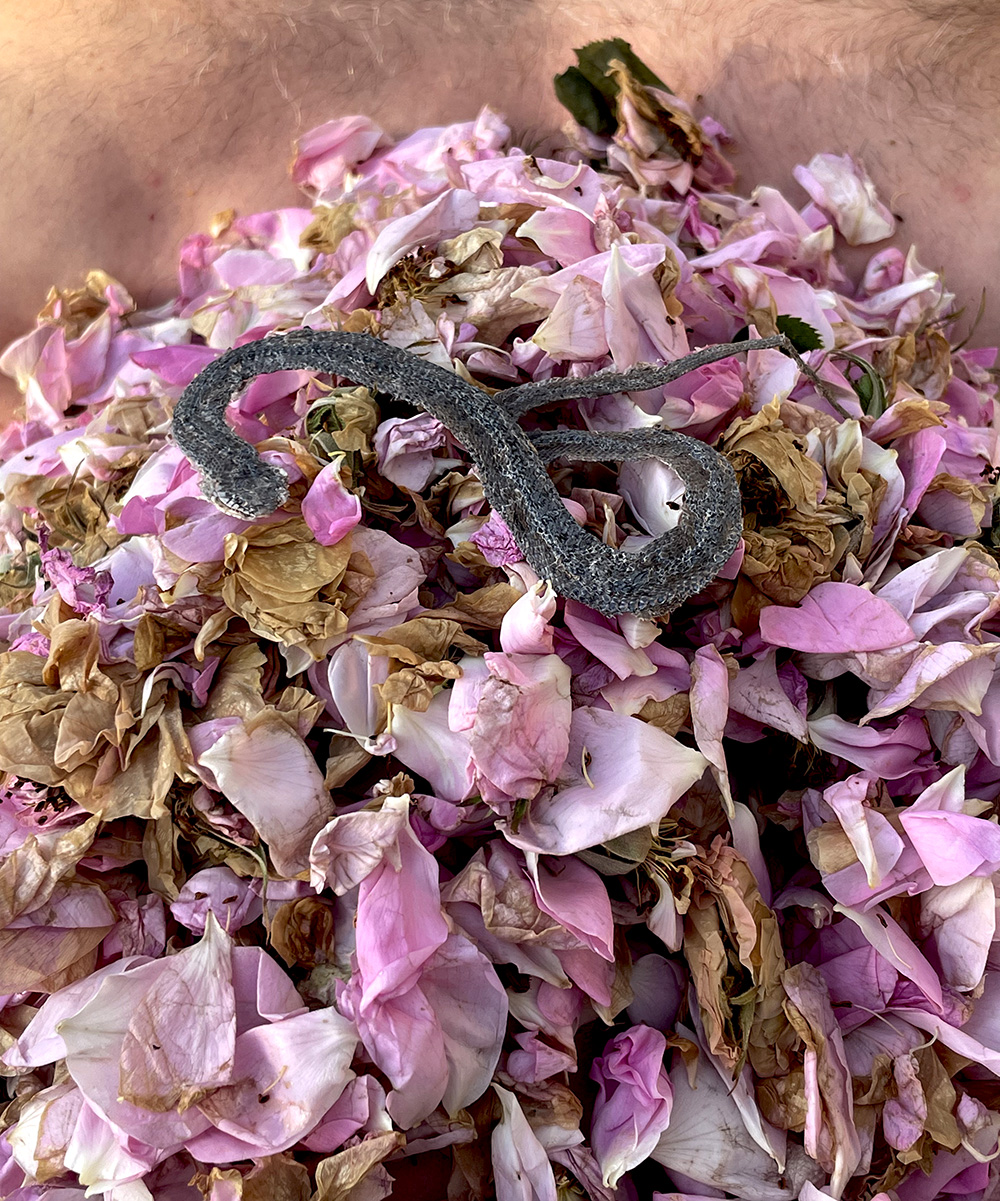
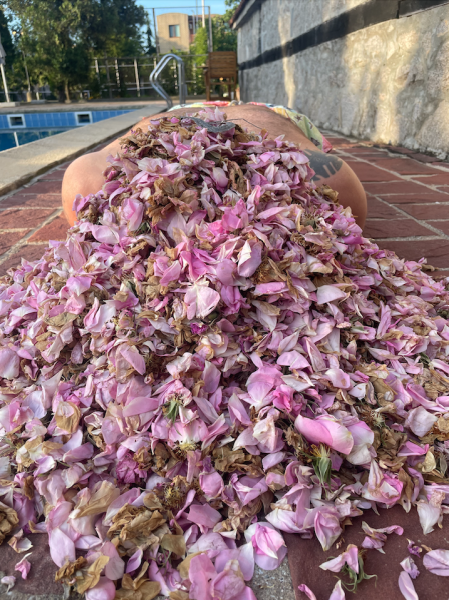
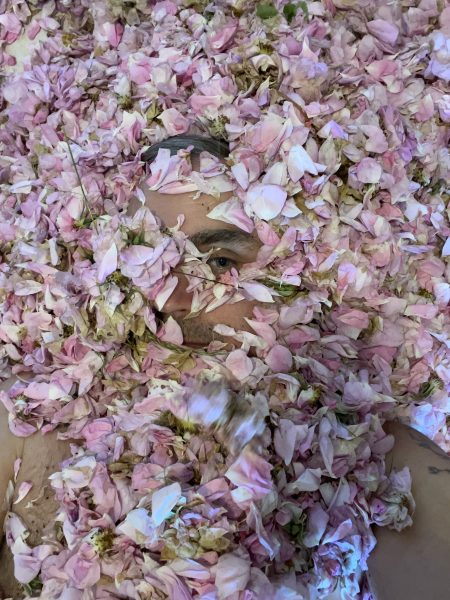
The photo series Eurydike, where is the Snake? refers to the Strandja Nature Reserve in Bulgaria on the Black Sea coast. This area is believed to be the origin of the Thracian version of the story of Orpheus and Eurydice, and the Voynov family’s Asti Art Hotel houses several works by important Romanian and Bulgarian artists on this theme in its sculpture garden. Hubert Hasler has linked this myth to the nearby rose fields in the Valley of Roses. The Damask rose is of great economic importance to Bulgaria, as 70 per cent of the rose oil used worldwide (in the perfume and cosmetics industries) comes from the Valley of Roses. The Damask rose originates from Persia, where it has been cultivated for centuries due to its beguiling fragrance, to produce rose oil and rose water. It is also said to possess healing powers. Its scent is believed to lift the spirits and relieve nervous tension. The oil has anti-inflammatory properties, whilst the blossoms are used to flavour jams, syrups and other local dishes.
In the eponymous photo series Behind the Pavilion, Hubert Hasler examines the rear sides of the national pavilions in the Giardini in Venice. At the front, nationality is celebrated; behind the pavilions, neophytes grow.
The photographs show that two completely divergent perspectives clash, yet remain unseen. When they do become visible, they serve as a visualisation of the status quo.
Behind the Pavilion is a journey through time and space, across different media and perspectives.
Die Kunst der Ökonomie und der Gewohnheiten in den Werken von Hubert Hasler
Ausgehend von den Ideen der Ökophilosophie setzt sich Hubert Hasler in seinen Kunstwerken mit aktuellen Fragestellungen auseinander. Er eröffnet eine neue Perspektive und vielschichtige Interpretationsmöglichkeiten im Bereich der Umweltethik. Ziel der Ökophilosophie ist es, die „Ersten Prinzipien“ – also die grundlegenden Annahmen in den Naturwissenschaften – zu beleuchten und zu hinterfragen. Die Idee, dass lebende und nicht-lebende Wesen miteinander verbundene und vernetzte Bestandteile des biosphärischen Netzes sind. Es ist unerlässlich, das System der Biosphäre und seine Bestandteile als ein ganzheitliches und komplexes Feld zu verstehen. Seine Sichtweise ist jedoch nicht romantisch wie in Henry David Thoreaus „Walden“ oder beim französischen Philosophen Jean-Jacques Rousseau. Hasler ist sich der Doppeldeutigkeit des Themas und der Unnachgiebigkeit großer Unternehmen und korrupter Politiker bewusst. Er verwebt auf subversive Weise gesellschaftspolitische Themen mit dem Thema Natur, wie beispielsweise Fremdenfeindlichkeit im Neophyten-Projekt #overrun, overrun global, autoritäre Politiker in und die Gefahr der KI-Optimierung in Beauty never Dies.
Die Ausstellung Behind the Pavilion ist sowohl eine Retrospektive, als auch eine Präsentation der neuesten Werke Eurydike, where is the Snake und die Videoarbeit I wanna be Tree, die 2026 anlässlich einer Residenz in Sinemorets, Bulgarien, entstanden sind.
Außerdem hat er speziell für die Ausstellung in Timisoara/Meta Spatiu die skulpturale Arbeit seed shields kreiert, die sich mit den Gebräuchen der Rumänen beschäftigt und eine Hommage an die Stadt ist, in der wir beide bereits viele tolle Ausstellungserfahrungen machen durften.
Die Ausstellung besteht aus Fotografien, Videos, Installationen, Skulpturen und einer Performance zur Eröffnung.
In allen Arbeiten behandelt Hubert Hasler das Thema Natur in seinen Facetten wie Missbrauch, Auslöschung, Klimawandel, Ausbeutung. Er verwendet die naturbezogenen Themen als Chiffre für Gesellschaftskritik. Hubert Hasler entortet Festgeschriebenes. Bäume (I wanna be a Tree Videoarbeit) bewegen sich im Wind, werfen ihre Blätter ab, lassen ihre Samen durch Wind und Wasser verbreiten, doch können sie sich selbst nicht fortbewegen. Durch die Mobilisierung von vermeintlich Festgesetztem verändert Hubert Hasler die gewohnte Perspektive und verschiebt Peripherien.
Hasler verwendet die Natur als Projektionsfläche (seed shield, Skulpturen) für alltägliche Themen. Die organisch und konstruktiv angelegten Strukturen, die sich aus der Zweidimensionalität ablösen, verwandeln sich zu surreal anmutenden Gestalten, die neue Denkräume eröffnen. Hasler spricht sowohl die Verformung und partielle Auslöschung an, indem Bäume zu Gunsten von Verbauung vertrieben/gefällt werden, als auch die daraus resultierende Flucht vieler Menschen, die ihre von der Zivilisation vernichtete Heimat verlassen müssen, um sich neu verorten zu können.
In seiner performativen Foto- und Filmserie I wanna be a Tree, bezieht Hubert Hasler sich auf die Bulgarische Tradition der Kukeri. Beim jährlichen SURWA-Festival in Pernig wird der Winter von haarigen Übermenschen/Monstern vertrieben. Im Stil der Kukeri Kostüme kreierte Hubert Hasler ein Baum Kostüm, mit dem er durch die Natur und urban bebaute Gegenden zieht. Gehende Bäume, die ihre Umgebung erkunden, ihre gewohnte Standfestigkeit zugunsten von Mobilität verlassen. Im Gegensatz zu Thoreau, der sich in die Wälder zurückzog, um einen alternativen Lebensstil zu erproben, transformiert Hasler sich selbst in einen Baum. Wie das Kind in Kim de L ́Horizons Blutbuch, das sich wünscht, eine Blutbuche zu werden, um seiner Isolation und dem Unverständnis seiner Umgebung zu entfliehen, beschützt das Baumkostüm die Protagonist:innen. (Aussagen von Besucher:innen, die anlässlich der Performance ins Baumkostüm schlüpften, waren Geborgenheit, Gelassenheit, Wohl fühlen). Das Baumkostüm wird aus Neophyten gebunden. Die „ausländischen“ Pflanzen, Schreckgespenster von Schrebergärtner:innen, machen sich auf den Weg, wortwörtlich. Schon vor langer Zeit sind sie mitgebracht, in anderen Kulturen angeschwemmt, worden, haben sich adaptiert, manchmal auch assimiliert.
Wir zeigen Filme der Serie overrun global aus Korea, Malta, Malediven, in denen Hubert Hasler aktiv Neophyten transportiert und sie an andere Orte transformiert. Die Verbreitung der Neophyten durch Entdeckungen und Geschenke an Herrschende (Zar Alexander schenkte Metternich 1814, anlässlich des Wiener Kongress Giant Hogweed Samen.) wird thematisiert.
„Alles begann mit einem 10-Kilo-Sack Kartoffeln in einem Bus von Münster ins nordrhein-westfälische Umland, der auf einem eigenen Sitzplatz mitfahren durfte. Seit über einem Jahrzehnt beschäftige ich mich mit Neophyten – Pflanzen, die in der Region nicht heimisch sind. Dabei handelt es sich um Pflanzen, die sich in ihrer vermeintlichen neuen Heimat vor allem durch den Transport durch Menschen, durch Sammler oder durch Landschaftsgestaltung etablieren.
Der erste Kurzfilm über die Ausbreitung von Pflanzen – ein bis zum Rand mit Japanischem Staudenknöterich (Fallopia japonica) beladenes Auto, das ich ins Atelier brachte, um eine Installation zu gestalten und zu fotografieren. Damit trage ich aktiv zur Ausbreitung dieser Pflanzen mit negativer Konnotation bei.
Auf Malta transportiere ich Agaven (Agave americana) von einem Ort zum anderen; in Südkorea fand ich Robinien (Robinia pseudoacacia) an einem abgelegenen Ort in der Nähe eines sehr alten Tempels; und auf Felhidhoo, einer Insel im Vaavu-Atoll auf den Malediven, helfe ich der Damiana (Turnera ulmifolia) dabei, ihren Weg von einer Insel zur anderen zu finden, und vieles mehr. Meine zahlreichen Kurzfilme zeugen von menschlichem Handeln, begleitet von der unaufhaltsamen Vermischung und Ausbreitung dieser unerwünschten Pflanzen – symptomatisch für eine sich ständig wandelnde Gesellschaft.“
Hubert Hasler
Die Fotoserie Eurydike, where is the Snake? bezieht sich auf das Naturschutzgebiet Strandja in Bulgarien an der Schwarzmeer Küste. In diesem Gebiet wird der Ursprung der Thrakischen Version der Orpheus und Eurydike Geschichte vermutet und das Asti Art Hotel der Familie Voynov besitzt einige Arbeiten wichtiger Rumänischer und Bulgarischer Künstler:innen zu diesem Thema in seinem Skulpturengarten. Hubert Hasler hat diesen Mythos mit den naheliegenden Rosenfeldern im Tal der Rosen verbunden. Die Damaszener Rose ist von großer wirtschaftlicher Bedeutung für Bulgarien, da 70% des weltweit verwendeten Rosenöls (Parfum- und Kosmetikindustrie) aus dem Tal der Rosen stammt. Die Damaszener Rose stammt ursprünglich aus Persien und wurde bereits da seit Jahrhunderten wegen ihres betörenden Duftes angebaut, um Rosenöl und Rosenwasser zu gewinnen. Ihr werden auch heilende Kräfte nachgesagt. Ihr Duft soll die Stimmung aufhellen und nervliche Anspannungen lindern. Das Öl wirkt entzündungshemmend, die Blüten werden zum Aromatisieren von Marmeladen, Sirup und anderen lokalen Speisen verwendet.
In der titelgebenden Fotoserie Behind the Pavilion betrachtet Hubert Hasler die Rückseiten der Nationalen Pavilions in den Giardinis in Venedig. Vorne wird Nationalität gefeiert, hinter den Pavilions wachsen Neophyten.
Die Photo zeigen, dass zwei völlig divergente Anschauungen aufeinanderprallen, doch nicht gesehen werden. Wenn sie sichtbar werden sind sie eine Visualisierung des Status Quo.
Behind the Pavilion ist eine Reise durch Zeit und Raum, durch verschiedene Medien und Perspektiven.
Denise Parizek, Curator
huberthasler @instagram
contemporary_nomades@instagram