Hubert Hasler
Born in Styria, a graduate of the Kubelka School of Photography and a qualified florist, he lives and works in Vienna. He has been working on neophyte projects for many years. His workshops are held in Germany, Austria and Italy, and he exhibits internationally.
He presents a different perspective and a multi leveled possibility of interpretation into the environmental ethics. In all his works, Hubert Hasler explores the theme of nature in its various facets, such as abuse, extinction, climate change and exploitation. He uses nature-related themes as a metaphor for social criticism. Hubert Hasler deconstructs established norms. By setting what is supposedly fixed in motion, Hubert Hasler alters our familiar perspective and shifts the boundaries of the periphery.
Geboren in der Steiermarkt, Absolvent der Fotoschule Kubelka, ausgebildeter Florist, lebt und arbeitet in Wien. Seit Jahren arbeitet er an an Neophytenprojekten. Seine Workshops werden in Deutschland, Österreich und Italien angeboten, er stellt international aus.
Er eröffnet eine neue Perspektive und vielschichtige Interpretationsmöglichkeiten im Bereich der Umweltethik. In all seinen Werken setzt sich Hubert Hasler mit dem Thema Natur in ihren verschiedenen Facetten auseinander, darunter Missbrauch, Artensterben, Klimawandel und Ausbeutung. Er nutzt naturbezogene Themen als Metapher für Gesellschaftskritik. Hubert Hasler dekonstruiert etablierte Normen. Indem er das vermeintlich Festgesetztes in Bewegung versetzt, verändert Hubert Hasler unsere gewohnte Perspektive und verschiebt die Grenzen des Randbereichs.
Euridyke, where is the Snake?
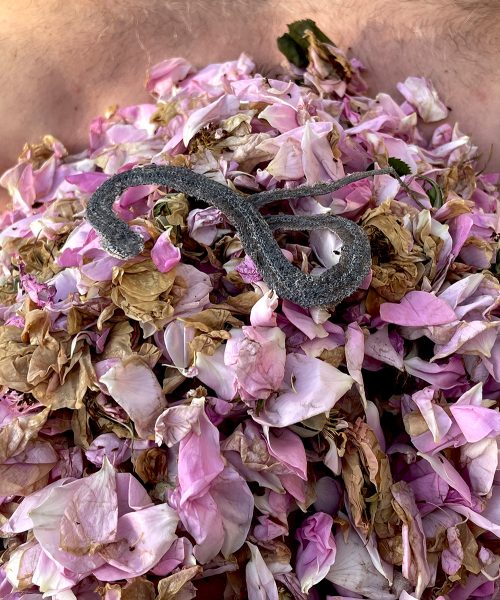
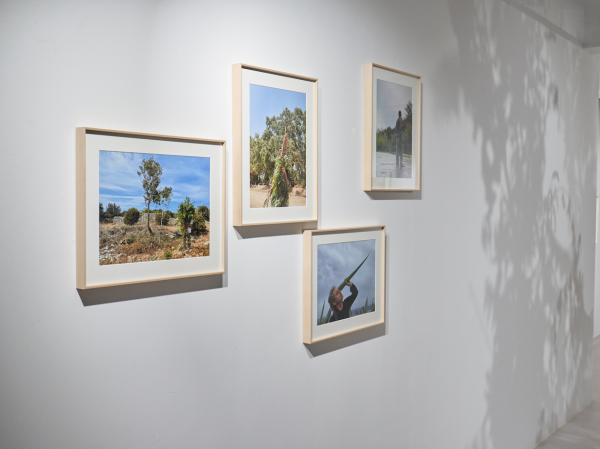
The photo series Eurydice, where is the Snake? is set in the Strandja Nature Reserve in Bulgaria, on the Black Sea coast. This area is believed to be the origin of the Thracian version of the Orpheus and Eurydice story, and the Voynov family’s Asti Art Hotel features several works by prominent Romanian and Bulgarian artists on this theme in its sculpture garden. Hubert Hasler has linked this myth to the nearby rose fields in the Valley of Roses. The Damask rose is of great economic importance to Bulgaria, as 70 per cent of the rose oil used worldwide (in the perfume and cosmetics industries) comes from the Valley of Roses. The Damask rose originates from Persia, where it has been cultivated for centuries due to its beguiling fragrance, to produce rose oil and rose water. It is also said to possess healing powers. Its scent is believed to lift the spirits and relieve nervous tension. The oil has anti-inflammatory properties, whilst the blossoms are used to flavour jams, syrups and other local dishes.
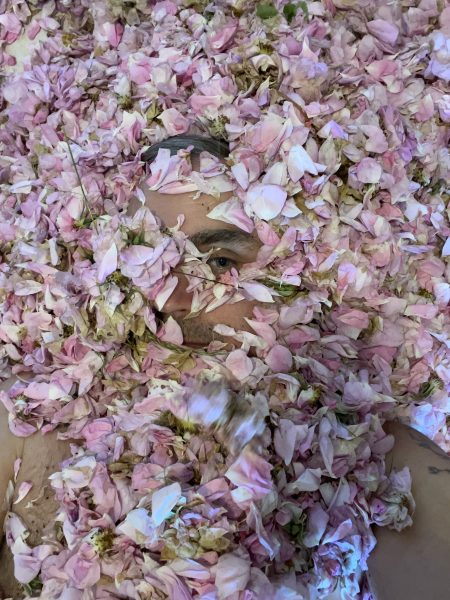
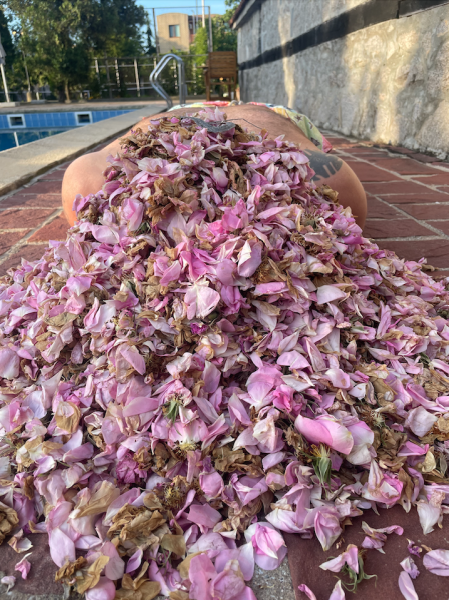
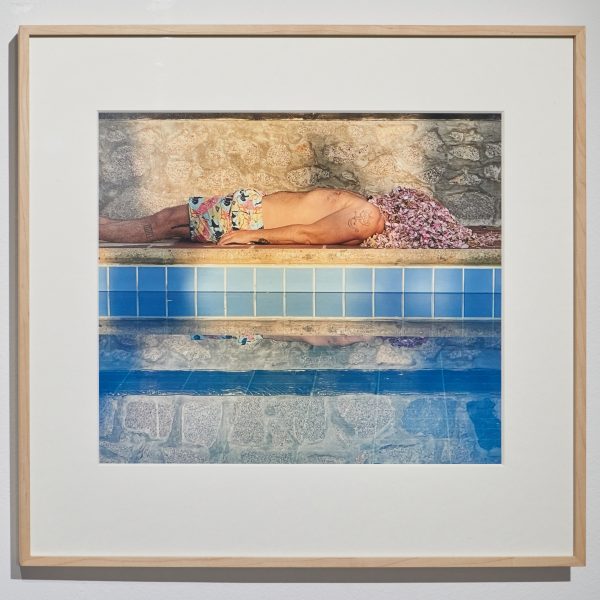
Die Fotoserie Eurydike, where is the Snake? bezieht sich auf das Naturschutzgebiet Strandja in Bulgarien an der Schwarzmeer Küste. In diesem Gebiet wird der Ursprung der Thrakischen Version der Orpheus und Eurydike Geschichte vermutet und das Asti Art Hotel der Familie Voynov besitzt einige Arbeiten wichtiger Rumänischer und Bulgarischer Künstler:innen zu diesem Thema in seinem Skulpturengarten. Hubert Hasler hat diesen Mythos mit den naheliegenden Rosenfeldern im Tal der Rosen verbunden. Die Damaszener Rose ist von großer wirtschaftlicher Bedeutung für Bulgarien, da 70% des weltweit verwendeten Rosenöls (Parfum- und Kosmetikindustrie) aus dem Tal der Rosen stammt. Die Damaszener Rose stammt ursprünglich aus Persien und wurde bereits da seit Jahrhunderten wegen ihres betörenden Duftes angebaut, um Rosenöl und Rosenwasser zu gewinnen. Ihr werden auch heilende Kräfte nachgesagt. Ihr Duft soll die Stimmung aufhellen und nervliche Anspannungen lindern. Das Öl wirkt entzündungshemmend, die Blüten werden zum Aromatisieren von Marmeladen, Sirup und anderen lokalen Speisen verwendet.
I wanna be a Tree
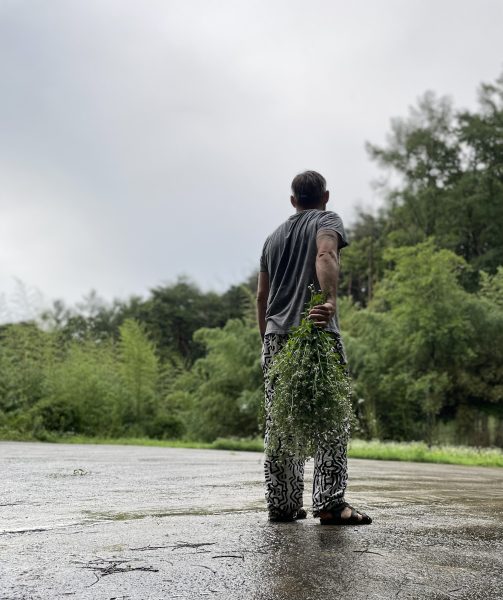
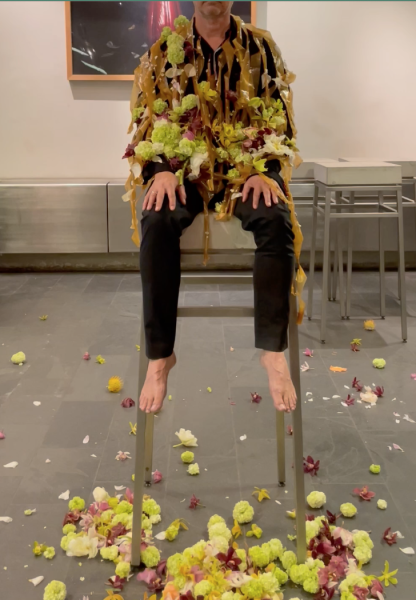
In his performative photography and film series I wanna be a Tree, created during a residency in Bulgaria in 2026, Hubert Hasler draws on the Bulgarian tradition of the Kukeri. At the annual SURWA Festival in Pernig, winter is driven away by hairy superhumans/monsters. In the style of the Kukeri costumes, Hubert Hasler created a tree costume, in which he wanders through natural and urbanised areas. Walking trees that explore their surroundings, abandoning their usual steadfastness in favour of mobility. Unlike Thoreau, who retreated into the woods to try out an alternative lifestyle, Hasler transforms himself into a tree. Like the child in Kim de L’Horizon’s *Blood Beech*, who wishes to become a blood beech to escape his isolation and the lack of understanding from those around him, the tree costume protects the protagonists. (Comments from visitors who slipped into the tree costume during the performance included feelings of security, serenity and well-being). The tree costume is woven from non-native plants. These ‘foreign’ plants, the bane of allotment gardeners, are setting off – quite literally. They were brought here a long, long time ago, washed ashore from other cultures, and have adapted – and sometimes even assimilated.
Hubert Hasler deconstructs established conventions.
Trees sway in the wind, shed their leaves, and allow their seeds to be carried by wind and water, yet they cannot move of their own accord. By challenging what is supposedly fixed, Hasler alters our familiar perspective and shifts the boundaries of what is considered peripheral. Like Richard Hirschbäck, Hasler uses nature as a canvas for everyday themes. The organically and structurally designed forms, which break free from two-dimensionality, transform into surreal-seeming figures that open up new spaces for thought. Hasler addresses both the deformation and partial obliteration caused by trees being displaced or felled to make way for development, and the resulting exodus of many people who are forced to leave their homelands—destroyed by civilisation—in order to find a new place to call home.
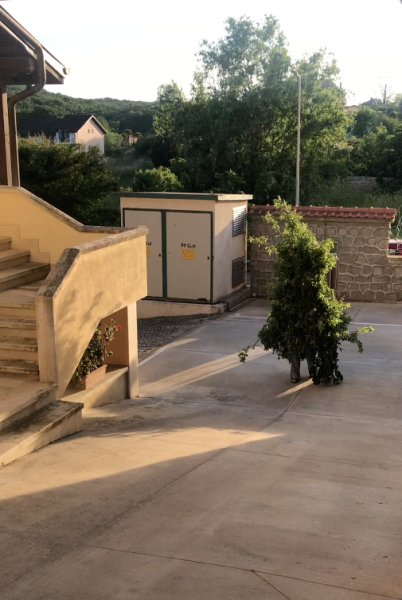
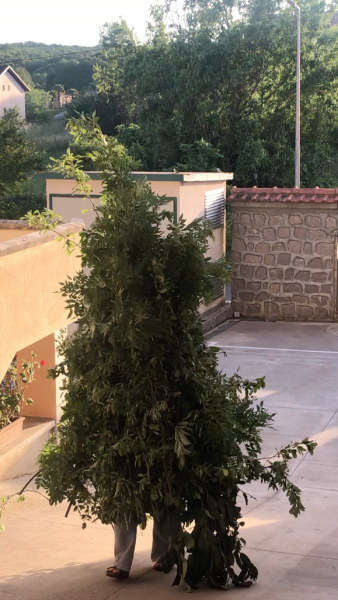
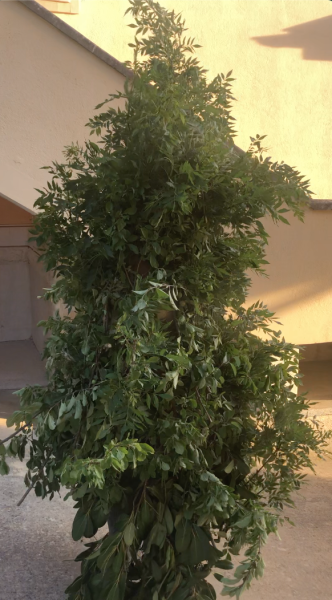
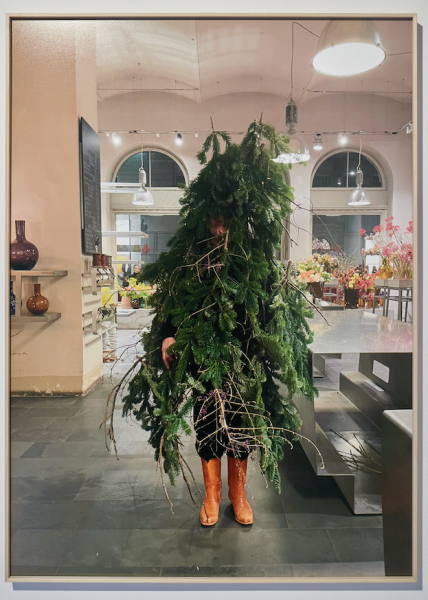
In seiner performativen Foto- und Filmserie I wanna be a tree, die anlässlich einer Residency in Bulgarien 2026 entstand, bezieht Hubert Hasler sich auf die Bulgarische Tradition der Kukeri. Beim jährlichen SURWA- Festival in Pernig wird der Winter von haarigen Übermenschen/Monstern vertrieben. Im Stil der Kukeri Kostüme kreierte Hubert Hasler ein Baum Kostüm, mid dem er durch die Natur und urban bebaute Gegenden zieht. Gehende Bäume, die ihre Umgebung erkunden, ihre gewohnte Standfestigkeit zugunsten von Mobilität verlassen. Im Gegensatz zu Thoreau, der sich in die Wälder zurückzog, um einen alternativen Lebensstil zu erproben, transformiert Hasler sich selbst in einen Baum. Wie das Kind in Kim de L ́Horizons Blutbuch, das sich wünscht, eine Blutbuche zu werden, um seiner Isolation und dem Unverständnis seiner Umgebung zu entfliehen, beschützt das Baumkostüm die Protagonist:innen. (Aussagen von Besucher:innen, die anlässlich der Performance ins Baumkostüm schlüpften, waren Geborgenheit, Gelassenheit, Wohl fühlen). Das Baumkostüm wird aus Neophyten gebunden. Die „ausländischen“ Pflanzen, Schreckgespenster von Schrebergärtner:innen, machen sich auf den Weg, wortwörtlich. Schon lange vor lan- ger Zeit sind sie mitgebracht, in anderen Kulturen angeschwemmt, worden, haben sich adaptiert, manchmal auch assimiliert.
Hubert Hasler entortet Festgeschriebenes.
Bäume bewegen sich im Wind, werfen ihre Blätter ab, lassen ihre Samen durch Wind und Wasser verbreiten, doch können sich selbst nicht fortbewegen. Durch die Mobilisierung von vermeintlich Festgesetztem verändert Hasler die gewohnte Perspektive und verschiebt Peripherien. Wie Richard Hirschbäck verwendet Hasler die Natur als Projektionsfläche für alltägliche Themen. Die organisch und konstruktiv angelegten Strukturen, die sich aus der Zwei- dimensionalität ablösen, verwandeln sich zu surreal anmutenden Gestalten, die neue Denkräume eröffnen. Hasler spricht sowohl die Verformung und partielle Auslöschung an, indem Bäume zu Gunsten von Verbauung vertrieben/gefällt werden, als auch die daraus resultierende Flucht vieler Menschen, die ihre von der Zivilisation vernichtete Heimat verlassen müssen, um sich neu verorten zu können.
Waiting for…..
or
an attempt to organise one’s thoughts, 2026
The intensity of the rose blossoms and the complexity of the themes make it impossible to organise one’s thoughts. They drift in different directions. As always, Hubert Hasser’s photographs are a delight to look at, yet upon closer inspection, various themes emerge, all of which converge in his work.
The work *Waiting for…* is like a brief free-dive into the Damascus roses. A beguiling pause amidst the scent of roses, until the natural urge to breathe sets in.
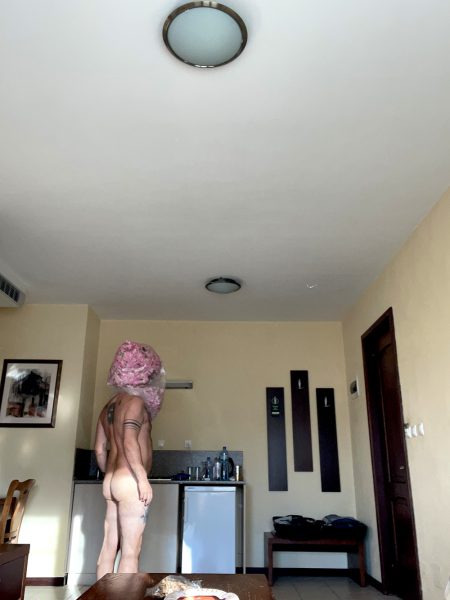
The sculptural transformation of the body – the self-portraits with rose heads – also embody the idea or desire to circumvent Face ID. Visually inspired by the mystical figures of the Bulgarian Kukeri, we find the rose petals in a plastic bag that holds the heads – both human and rose-like – together. This evokes a further association with Strandja National Park, on whose beaches plastic debris was also found and collected.
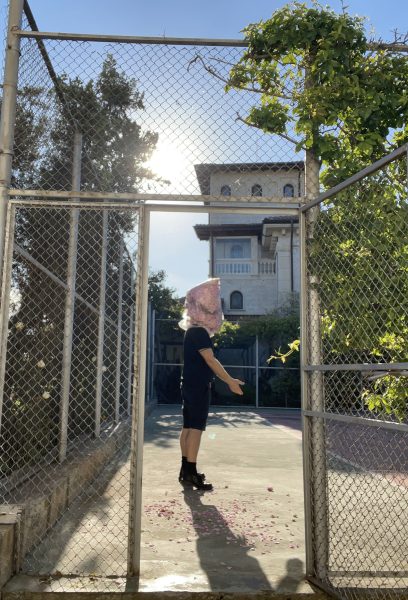
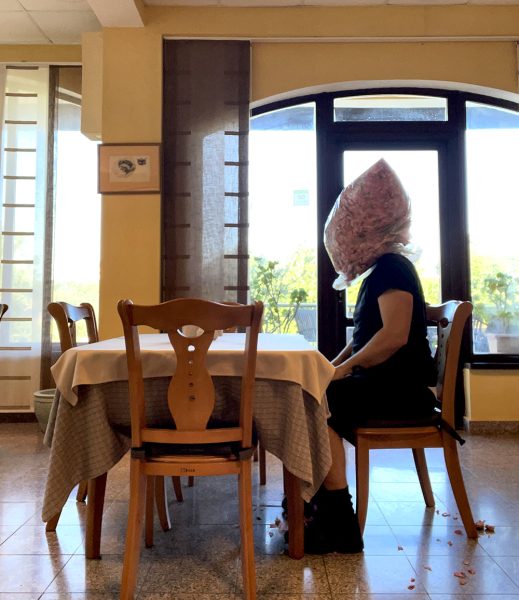
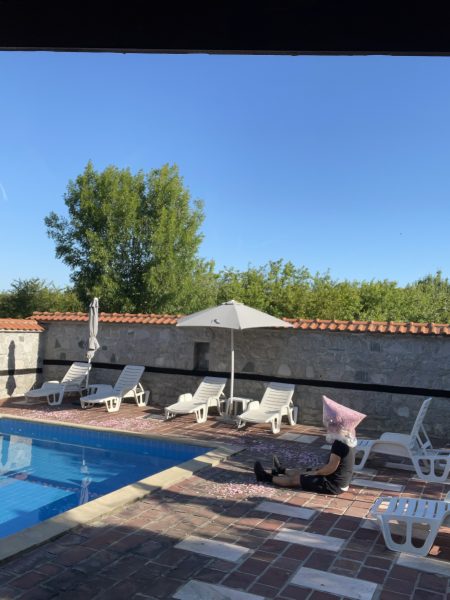
Behind the Pavilion 2024
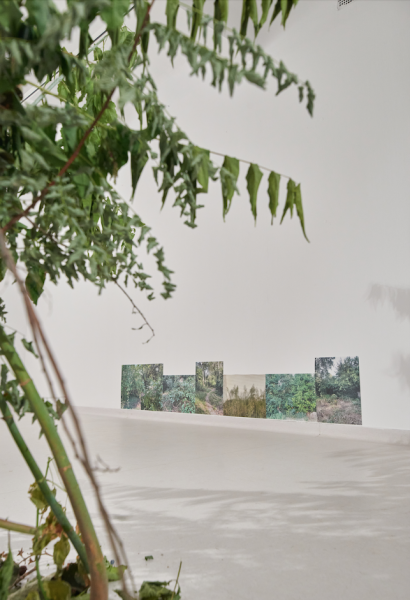
In the eponymous photo series Behind the Pavilion, Hubert Hasler examines the rear sides of the national pavilions in the Giardini in Venice. At the front, nationality is celebrated; behind the pavilions, neophytes grow. The photographs show that two completely divergent perspectives clash, yet remain unseen. When they do become visible, they serve as a visualisation of the status quo.
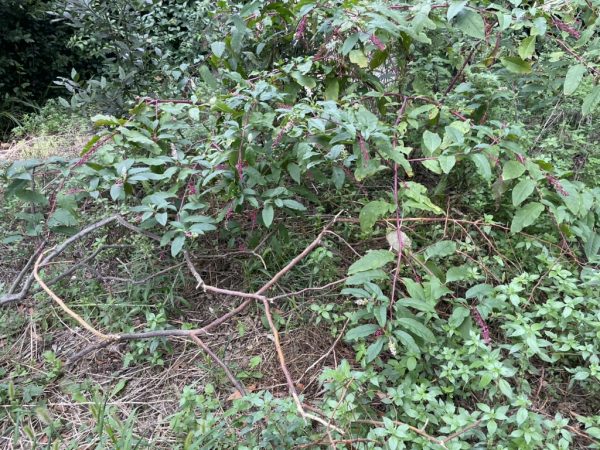
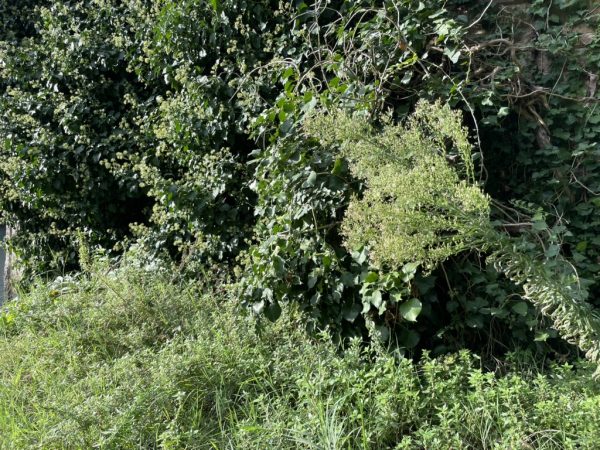
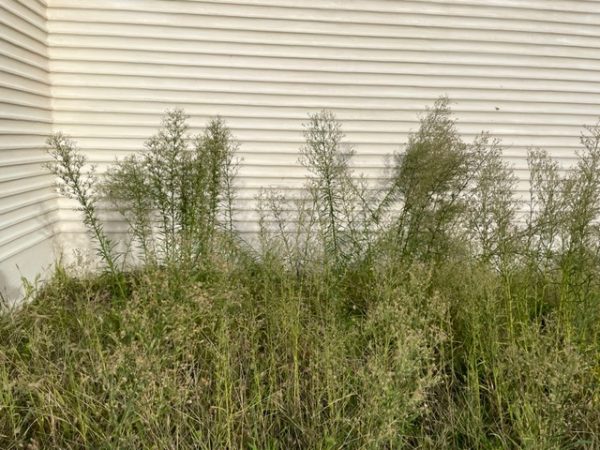
“It all began with a 10-kilo sack of potatoes on a bus from Münster to the North Rhine-Westphalia countryside, which was allowed to travel in its own seat.
For over a decade, I have been studying neophytes – plants that are not native to the area. These are plants that establish themselves in their supposed new home mainly through human transport, by collectors, or through landscaping.
The first short film about overgrowth – a car loaded to the brim with Japanese knotweed (Fallopia japonica), which I brought to the studio to create and photograph an installation. In doing so, I am actively contributing to the spread of these plants with negative connotations.
In Malta, I transport agaves (Agave americana) from one place to another; in South Korea, I found black locust trees (Robinia pseudoacacia) in a remote spot near a very old temple; and on Felhidhoo, an island in the Vaavu Atoll in the Maldives, I help damiana (Turnera ulmifolia) to make its way from one island to another, and much more. My overflowing short films bear witness to human activity, accompanied by the unstoppable intermingling and spread of these unwanted plants, symptomatic of a constantly changing society.”
Hubert Hasler, 2022

„In der Nacht, wenn all die verrückten und weniger verrückten Ereignisse des Alltags sich in den Ruhemodus begeben, beginnt an diesem Ort eine Art Metamorphose. Was vom Tage übrig blieb, „The Remains of the Day“ , heißt es an anderer Stelle.
Alles, was passiert ist, passieren hätte können oder vielleicht irgendwann passieren wird, erwacht zum Leben und bekommt eine eigene Dynamik. Täglich gräbt sich in diesem Raum der dramaturgische Wahnsinn des Alltags in die DNA des Ortes und dringt dabei in die Substanz seiner Fundamente. Ähnlich dem Pflanzensaft der unzähligen Blumen, die hier in den letzten 23 Jahren Zwischenstation gemacht haben und deren herabfallende Blätter beim Vorbereiten für den Verkauf dabei oft zertreten und zerquetscht werden.
Schon häufig habe ich mir vorgestellt, was nachkommende Generationen, wenn sie Teile des Steinfußbodens finden, für Vermutungen anstellen würden und welche Rückschlüsse sie aus diesem Sammelsurium von unterschiedlichstem pflanzlichem Erbgut ziehen.
In meiner kindlichen Vorstellung erwachen hier, wenn es draußen dunkel ist und sich kein menschliches Wesen mehr im Geschäft befindet, die Dramaturgien des Alltags zum Leben.
Aus allen Ecken und Winkeln erscheinen sie, spuken umher und erzählen ihre Geschichten, die sie am Tage nicht zu Ende erzählen konnten. Vielleicht sind es die Gegensätze der menschlichen Natur, die sich hier im Spiel auf eine andere Ebene begeben.
In einer Zusammenkunft, wo alles möglich erscheint und nichts infrage gestellt wird. wird, und bei der eine Grundvoraussetzung bedingungsloses Zulassen sinnlicher Wahrnehmung ist.
Es gibt nichts, was hier nicht verhandelt werden könnte, und selbst das Abwegigste bekommt seinen Platz in der Handlung. Was sich am Tag der Schönheit, der Umgebung und der Logik des Menschseins unterordnet, erobert bei Nacht seinen Raum.
Dies alles nimmt Gestalt an, und dort, wo sonst Blumen verkauft werden, entsteht ein heimliches Theater.
Gespielt wird nur für die geschlossene Gesellschaft der Nacht, und was auf dem Spielplan steht, bleibt immer eine Überraschung. Es kann natürlich passieren, dass ab und zu jemand von der Straße aus durch eines der großen Schaufenster hineinschaut. Ob sich diesem nicht geladenen Gast jedoch das Schauspiel zeigt, hängt einzig von seiner Bereitschaft ab.“
Andrea Geiss / Dramaturg
#overrun
#overrun, my exploration of neophytes, has been a recurring theme for me since 2016.
The first works were created during a three-month artist-in-residence program in 2017 in Schöppingen (North Rhine-Westphalia), organised by the Kunststiftung NRW. Further developments followed, including during residencies in Hamburg, Reelkirchen and Vienna.
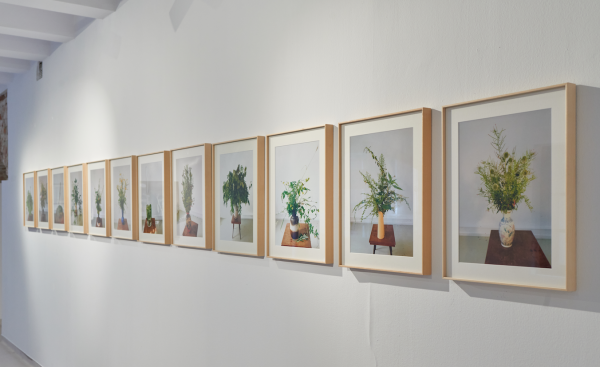
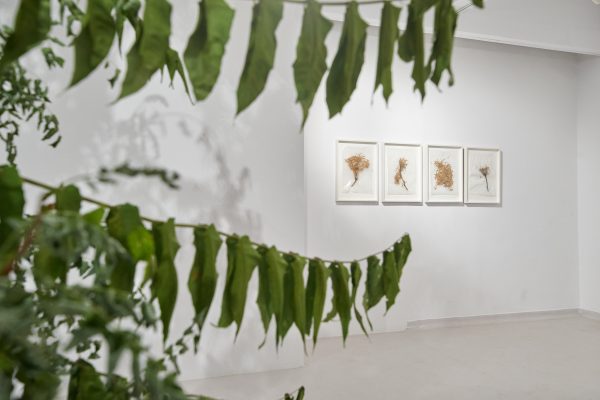
The plant material – all of it neophytes, invasive plants, not native to Central Europe – was collected, explored, processed, refined and transformed by me at these locations. I arranged some of it in vintage vases following the style of Flemish still lives.
I took digital photographs of these still lives using the same background and soft, natural light in the studio.
I climbed up into the trees to explore the trees’ view of their urban surroundings. I selected hundreds of impatiens seeds to stick onto standard fireworks. I failed in my attempt to send these seeds towards a new planet so that they might spread further. However, I am certain that these fired-off impatiens seeds were able to take root in ‘Planten und Blomen’, a park in Hamburg.
I also wanted to investigate the efficacy of ingredients from plants such as Japanese knotweed, so I steeped them in Lippischer gin for several months. I then tasted the results at overrun’s exhibition openings. In exhibitions, I like to display installation-based objects made from collected neophyte material in dialogue with the
photographic works. I often transform these structures per-formatively at openings by shredding them using a standard garden shredder.
I sweep the shredded material out of the exhibition space and back onto the pavement – back into the city where I originally found the plants. Sometimes I hide behind the neophytes; sometimes I even have to hold on to them. I enjoy gathering these neophytes and, in a spirit of association, helping them to spread further; the films documenting this can be viewed on you tube.
In August 2021, I travelled to Georgia to focus my attention on giant hogweed, which is considered dangerous. I took with me the seeds of this plant – native
to the Caucasus – that I had collected in Styria; a sort
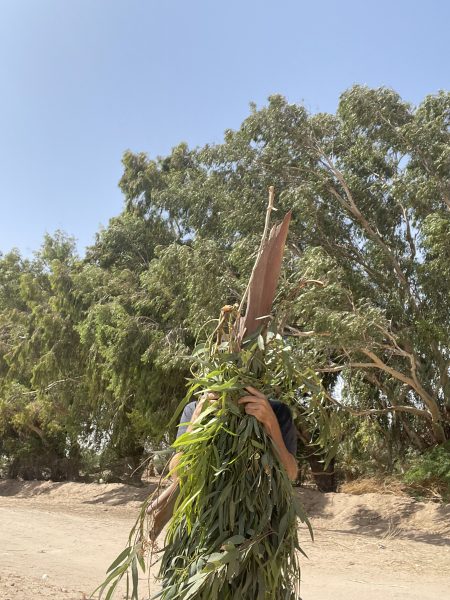
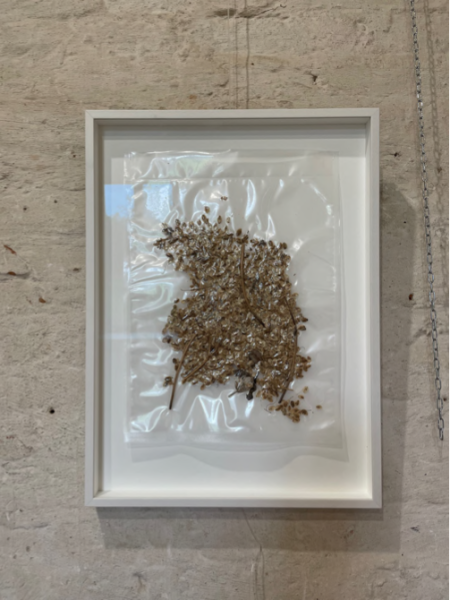
of re-import, so to speak. I also brought back some seeds, which, vacuum-sealed, serve as sculptural seed reserves. In 2022, I found vast quantities of eucalyptus in Jordan, and the tree of heaven even grows on remote islands in Croatia; I found Canadian ragweed in Korea in 2023. In 2024 and 2026 I researched in the Valley of Roses in Bulgaria, 2025 in Malta and Albania.
Five works from the #overrun series are been part of the collection at the Neue Galerie Graz since 2022.
Hubert Hasler, 2022
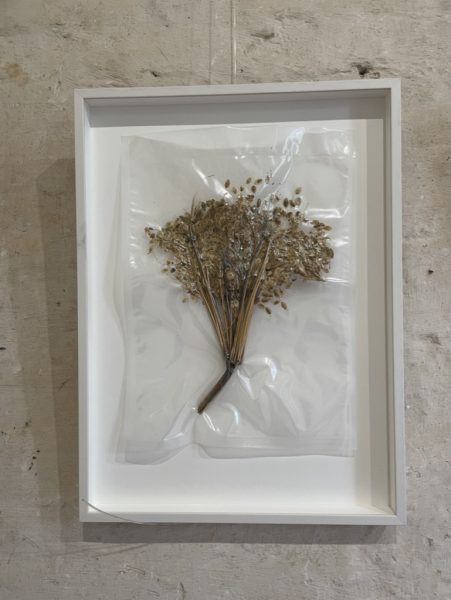
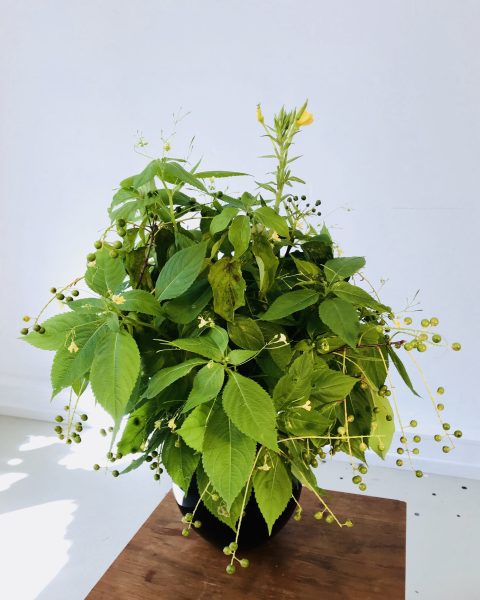
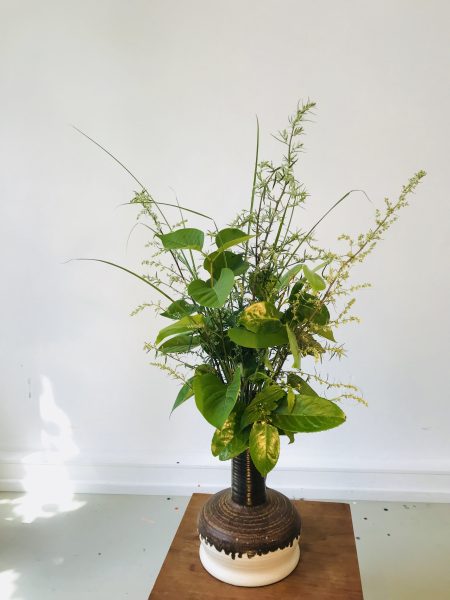
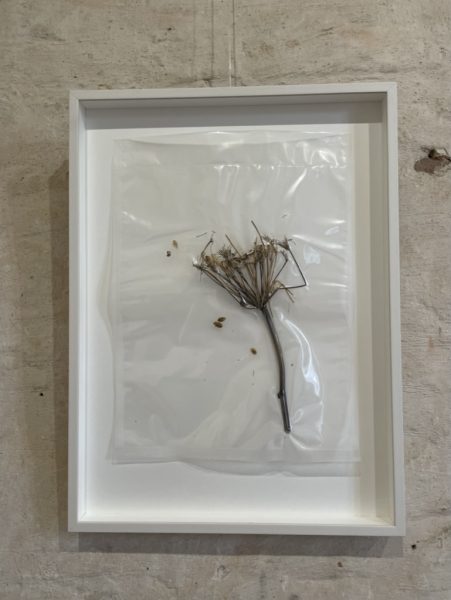
#overrun, die Auseinandersetzung mit Neophyten, begleitet, beschäftigt mich seit 2016.
Die ersten Arbeiten entstanden bei einem dreimonatigen Artist-in-Residence-Aufenthalt 2017 in Schöppingen (Nordrheinwestfalen) durch die Kunststiftung NRW. Weitere Ausarbeitungen folgten u. a. bei Stipendien in Hamburg, Reelkirchen und Wien.
Das pflanzliche Material, allesamt Neophyten, also invasive Pflanzen mit nicht mitteleuropäischem Hintergrund, wurden von mir an diesen Orten gesammelt, erkundet, verarbeitet, veredelt, transformiert. Einige drapierte ich nach Vorlagen flämischer Stillleben in Vasen, die ich im örtlichen Secondhandshop erworben hatte. Ich fotografierte diese Stillleben digital vor einem immer gleichen Hintergrund mit sanftem und natürlichem Licht im Studio. Ich kletterte auf Götterbäume, um die Sicht der Bäume auf ihre urbane Umgebung zu erforschen. Ich selektierte Hunderte von Springkrautsamen, um diese auf handelsübliche Raketen zu kleben. Und scheiterte bei dem Vorhaben, diese Samen in Richtung eines neuen Planten zu schicken, damit sich diese weiter ausbreiten. Jedoch bin ich mir sicher, dass diese abgefeuerten Springkrautsamen im Planten und Blomen, einer Parkanlage in Hamburg, ihre Wurzeln schlagen konnten. Ich wollte auch die Wirksamkeit der Inhaltsstoffe von Pflanzen wie dem Japanischen Knöterich untersuchen und legte sie für einige Monate in Lippischen Gin ein. Anschließend verkostete ich die Ergebnisse bei Eröffnungen von overrun.
In Ausstellungen zeige ich gerne in Korrespondenz zu den fotografischen Arbeiten – vorausgesetzt der Raum lässt dies zu – installative Objekte aus gesammeltem neophytischen Material. Oft transformiere ich diese Konstrukte bei Eröffnungen performativ, indem ich diese mithilfe eines handelsüblichen Häckslers zerkleinere. Das geschredderte Material kehre ich aus dem Ausstellungsraum zurück auf den Gehsteig, also in die Stadt hinein, in der ich die Pflanzen ursprünglich fand. Manchmal verstecke ich mich hinter Neophyten, manchmal muss ich mich sogar daran festhalten. Gerne packe ich diese Neophyten und helfe ihnen assoziativ bei der weiteren Verbreitung, die Filme dazu sind auf Vimeo zu sehen.
Im August 2021 ging es nach Georgien, um dem als gefährlich geltenden Riesenbärenklau meine Aufmerksamkeit zu widmen. Die von mir in der Steiermark gesammelten Samen der aus dem Kaukasus stammenden Pflanze nahm ich dorthin mit – quasi ein Reimport, brachte auch einige Samen mit, welche vacuumiert als skulpturale Samenreserven agieren. 2022 fand ich massig Eucalyptus in Jordanien und der Götterbaum wächst sogar auf abgelegenen Inseln in Kroatien, Kanadisches Berufskraut fand ich 2023 in Korea. 2024 wurde ich im Tal der Rosen in Bulgarien fündig und dieses Jahr auf Malta und in Albanien.
5 Arbeiten aus der #overrun Serie befinden sich seit 2022 in der Sammlung der neuen Galerie Graz.
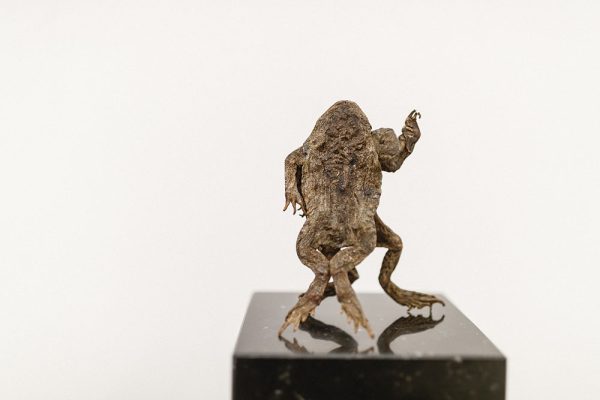

BEAUTY NEVER DIES
Sculpture 2024
2 mummified toads on a pedestal
The new work in the ‘Happy End’ series awaits the fulfilment of love that takes shape through the kiss in fairy tales, but only in fairy tales.
Or do questions arise as to why we endure plastic modifications to our bodies and pay huge sums of money to chase after perfect beauty in this eternal quest for fulfilled and unconditional love, eternal youth and a feeling of lightness?
All just to conform to an AI-generated ideal of beauty?
Or do we allow ourselves to age crankily, wrinkly and with dignity in order to face the finiteness of our own being with the fulfilment of life?
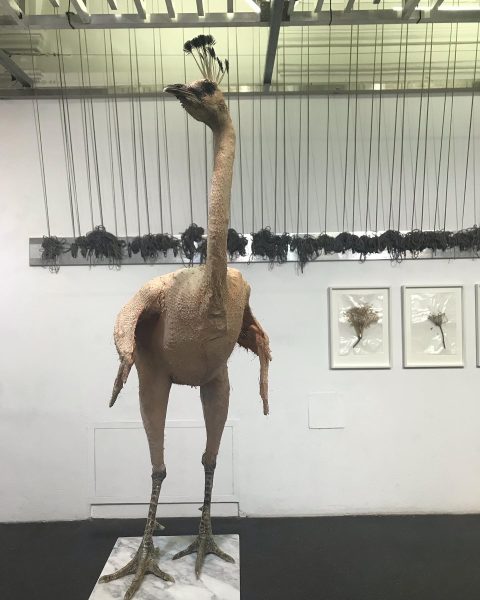
PAVO REAL
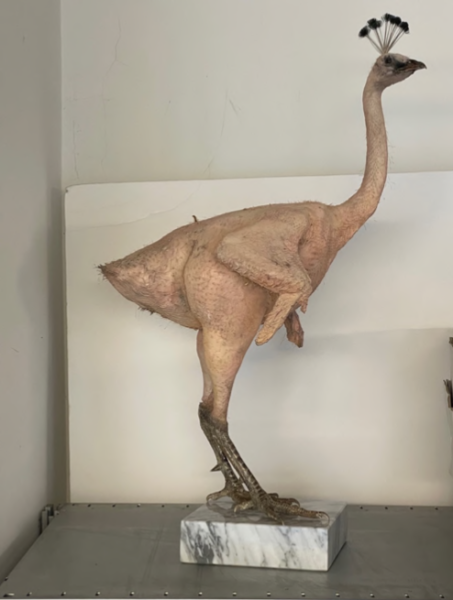
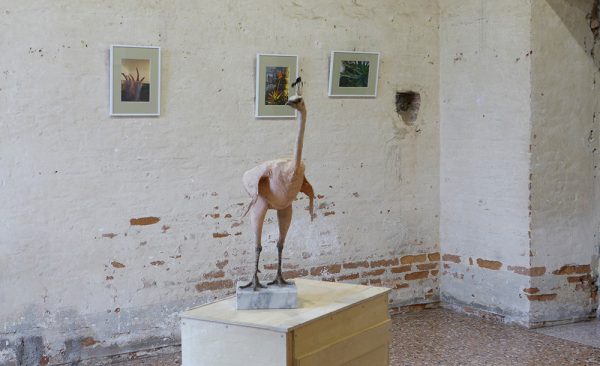
Naked, pavone imbalsamato, montato su Carrara Marmorsockel, 2021
For me, Pavo real is a sculpture that implies abuse of power. Formally, this work is irritating: the bird looks like a somewhat too thin turkey, naked, defenceless, stuffed and with a neat crown of feathers, standing on very opulent marble. The durable, somewhat brittle authenticity of the bird – rather gruesome at first glance – nevertheless radiates self-assurance and pomp.
I had my first thoughts about this work in 2017, when a young politician moved to the top in Austrian politics. I did not think that the young generation would fundamentally lack credibility, but I was thoroughly sceptical about this person. I couldn’t get Hans Christian Andersen’s “The Emperor’s New Clothes” out of my head, the story of the emperor who fell for swindlers and had the most beautiful, expensive clothes woven for himself – but without a single thread used. His followers played along with the game of the handsome (but in fact stark naked) emperor until the comment of a small child – “he’s naked” – put an end to the farce. In the real world, the bruised emperor is the aspiring politician who fancied himself in dubious splendour, let his advisory entourage earn money along the way and (co-)played a game that questioned his integrity from the start. In his own imagination as well as in the imagination of his followers, he was a colourful, dazzling peacock. In fact, he was only a crude “naked” version of himself.
In the meantime, there are several people on the national and international stage who can be associated with the naked peacock. There is a timelessness to the pavo real that can be transferred individually – and with a wink – to real people in the political arena.
Since 2017, I have been busy with the idea of the plucked, stuffed peacock. How can the project be realised? Where would I get a dead peacock? Who would stuff it for me, but pluck it first?
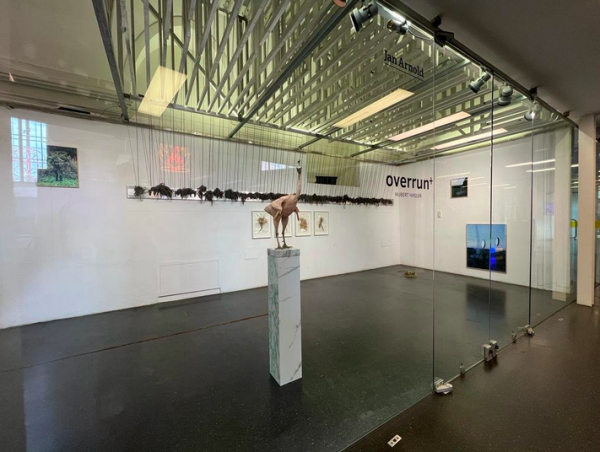
A few phone calls, e-mails, research, rejections and two years later I got in touch with the taxidermist Helmut Raith in Vienna’s Margareten district, one of the last masters of his trade. He wasn’t keen on the idea at first, but wasn’t completely averse to it either, always open to the unusual – after almost three years of waiting and continuous cooperation, I was able to pick up pavo real in autumn 2021 and show it to a larger audience in my exhibition “overrun +” in the Jan Arnold Gallery in the MuseumsQuartier. Barbara Beer wrote about it in the Kurier on 8 May 2022 – “Two weird birds and a naked peacock”.
Secondo me, Pavo real è una scultura che implica un abuso di potere. Formalmente, quest’opera è irritante: l’uccello sembra un tacchino un po’ troppo magro, nudo, indifeso, impagliato e con un’ordinata corona di piume, in piedi su un marmo molto opulento. L’autenticità durevole e un po’ fragile dell’uccello – piuttosto raccapricciante a prima vista – irradia tuttavia sicurezza e sfarzo.
Ho pensato per la prima volta a quest’opera nel 2017, quando un giovane politico è salito ai vertici della politica austriaca. Non pensavo che la giovane generazione mancasse fondamentalmente di credibilità, ma ero assolutamente scettico su questa persona. Non riuscivo a togliermi dalla testa “I vestiti nuovi dell’imperatore” di Hans Christian Andersen, la storia dell’imperatore che cadde per i truffatori e si fece confezionare i vestiti più belli e costosi, ma senza usare un solo filo. I suoi seguaci stavano al gioco dell’imperatore bello (ma in realtà nudo) finché il commento di un bambino – “è nudo” – mise fine alla farsa. Nel mondo reale, l’imperatore ammaccato è l’aspirante politico che si è fatto credere in un dubbio splendore, ha lasciato che il suo entourage di consulenti guadagnasse soldi lungo la strada e ha (co)giocato un gioco che ha messo in dubbio la sua integrità fin dall’inizio. Nella sua immaginazione e in quella dei suoi seguaci, era un pavone colorato e abbagliante. In realtà, era solo una rozza versione “nuda” di se stesso. Nel frattempo, ci sono diverse persone sulla scena nazionale e internazionale che possono essere associate al pavone nudo. C’è un’atemporalità nel pavo reale che può essere trasferita individualmente – e con una strizzatina d’occhio – a persone reali nell’arena politica.
Dal 2017 sono impegnato nell’idea del pavone spennato e impagliato. Come si può realizzare il progetto? Dove posso trovare un pavone morto? Chi lo impaglierebbe per me, ma prima lo spennerebbe?
Alcune telefonate, e-mail, ricerche, rifiuti e due anni dopo mi misi in contatto con il tassidermista Helmut Raith del quartiere Margareten di Vienna, uno degli ultimi maestri del suo mestiere. Dopo quasi tre anni di attesa e di continua collaborazione, nell’autunno del 2021 sono riuscita a prelevare il pavo vero e proprio e a mostrarlo a un pubblico più vasto nella mia mostra “overrun +” nella Jan Arnold Gallery del MuseumsQuartier. Barbara Beer ne ha scritto sul Kurier dell’8 maggio 2022 – “Due strani uccelli e un pavone nudo”.
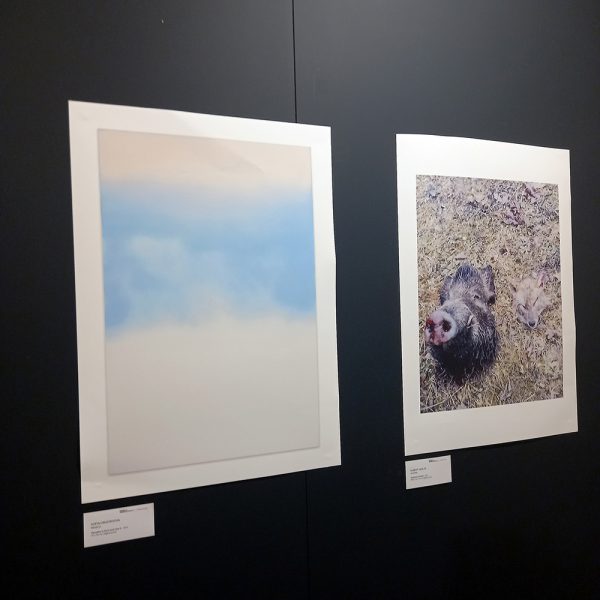
Pig Jackal/Meat Inspection
Hubert Hasler has long been exploring neophytes, using them as an allegory for xenophobia and incorporating them into the contemporary art context through photography and sculpture.
In his new, two-part work Meat Inspection & Wild Boar Jackal, he focuses on the display of the hunted. For Hasler, this is a revelation of the voyeuristic element in the struggle against, with or over nature.
Wild boars are breeding unchecked in our forests and, in some places, are becoming a nuisance due to a lack of natural predators.
Out of fear of disease, boundary fences are erected, as if a bacterium could be kept at bay by them.
The jackal, too, is an uninvited immigrant. Although jackals adapt very well to man-made cultural landscapes, they are classified as undesirable by the hunting community.
Who decides what is foreign and therefore dangerous to us? And is this assessment subject to the spirit of the times?
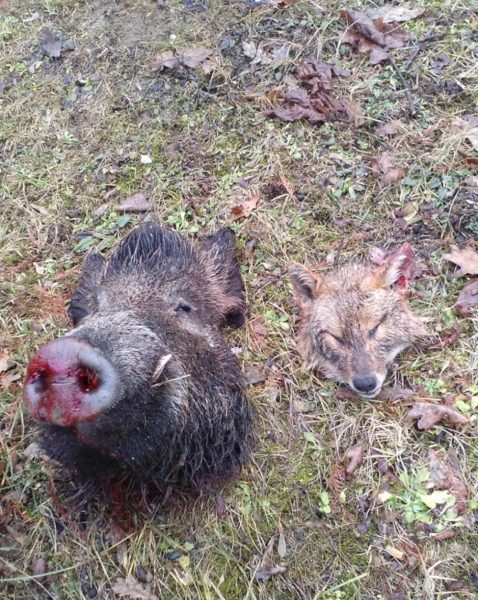
Schweinsschakal/Fleischbeschau
Hubert Hasler beschäftigt sich seit Langem mit Neophyten, verwendet sie als Allegorie für Fremdenfeindlichkeit, integriert sie photographisch und skulptural im zeitgenössischen Kunstkontext.
In seiner neuen, zweiteiligen Arbeit Fleischbeschau & Schweinschakal auf die Darbietung des Erlegten. Für Hasler ist das eine Offenbarung des voyeuristischen im Kampf gegen/mit/über die Natur.
Wildschweine vermehren sich in unseren Wäldern unreguliert, werden mancherorts zur Plage auf Grund fehlender Beutegreifer.
Aus Angst vor Seuchen werden Grenzzäune errichtet, als ob ein Bakterium sich davon abhalten ließe.
Auch der Schakal ist ein ungebetener Einwanderer. Obwohl Schakale sehr gut in von Menschen geschaffenen Kulturlandschaften zurechtkommen, werden sie von der Jägerschaft als unerwünscht eingestuft.
Wer bestimmt was fremd und dadurch für uns gefährlich ist? Und ist diese Einschätzung dem Zeitgeist unterworfen?
Denise Parizek, 2022
KISSKISS
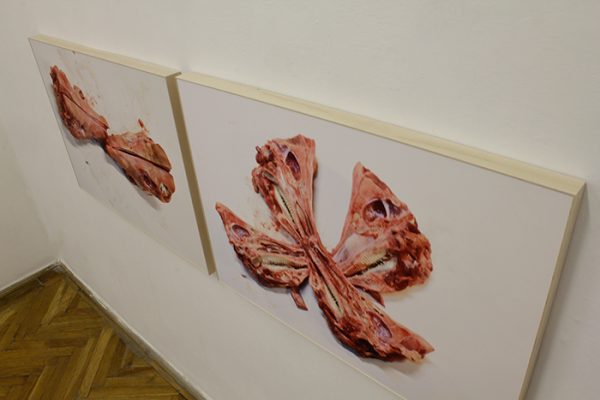
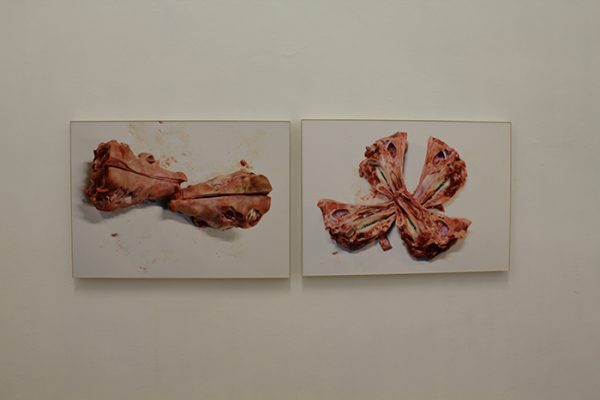
In medieval symbolism, the pig embodies gluttony, greed, filthiness,baseness, voluptuousness, and unchastity. Even in the Old Testament, the pig was regarded as impure and was thus not allowed to be eaten or sacrificed. During the Reformation, however, pig’s meat was a favorite dish for nobles and the clergy. The photographic work “Happy End (3)“ by Hubert Hasler recalls the lavish and extravagant lifestyle that even the former monk Martin Luther fell into. It can be seen as a symbol of
consumption – then and now.
When the construction of the first mosque in Leipzig began in 2013, extremist opponents of Islam speared five bloody pig’s heads on wooden poles, placing them on the construction site. Similar attacks were found, among others, at asylum seekers’ facilities. The display of pigs stands for protest and criticism of the current German and European (refugee) policy. Yet in a contemporary context the image aesthetics and coloring of the photography reduce the pig to something else: to what is left over, when
one indulges in excessive meat consumption. The current discourse can thus be broadened to the topics of nutrition, factory farming, and economic exploitation of particularly Eastern European workers in the meat processing industry.
The pig heads in this image, unaffected and authentic, speak for themselves and their fate. It is the latest work from the Happy End series by Hubert Hasler.
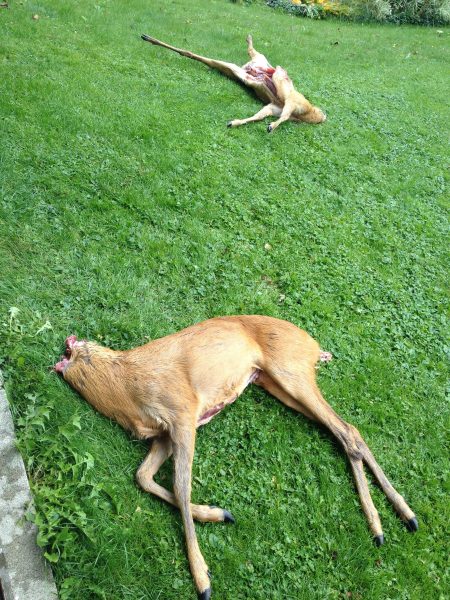
capreoluscapreolus#2
Hubert Hasler underscores Capreoluscapreolus # 2 with a performance and takes a not only Christian tradition. The walkways around the gallery was designed for the opening on 5.4.17 with a lot of flower petals. A very perishable path will point the way towards the gallery for a short duration, associative sensors are formed in the public space, the 2 deer of Capreoluscapreolus # 2 as a sacrifice, thus granting a gentle performance of the brutality of the image a transitory dignity.
Hubert Hasler’s work combines photography, installation and performance. A discussion of his socialization in a huntsman family and intensions through the activity with flowers was shown at the exhibition ossuary in collaboration with Zachari dark organic works and the gallery 12-14.
International Shows
Avoiding Memories Meta Spatiu Timisoara 2024
Trauma Monopol Gallery Belgrade 2023
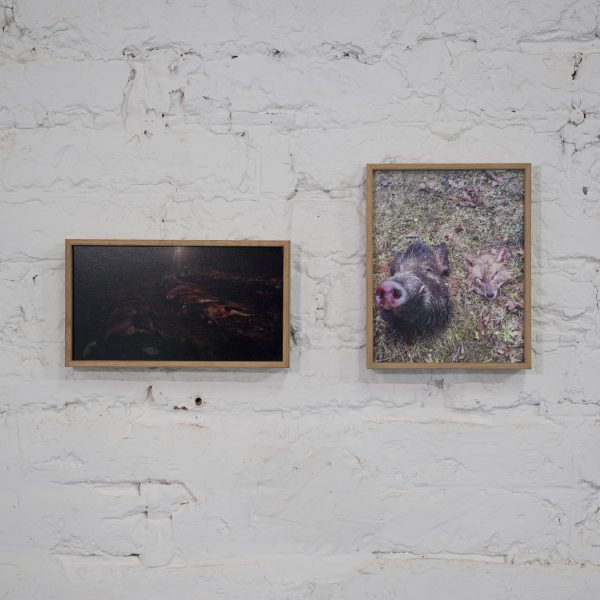
There is a crack in everything. That‘s how the light gets in. Villa Farsetti Santa Maria di Sale / Venetien / Italia 2023
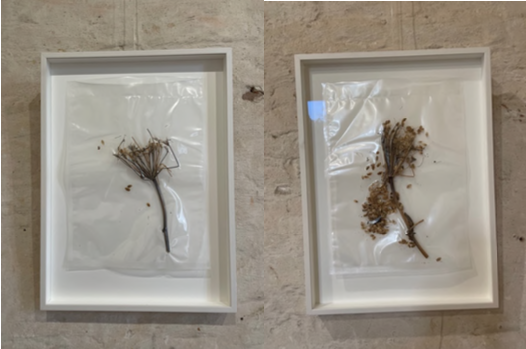
Trauma CRAC Gallery Castelnuovo 2023
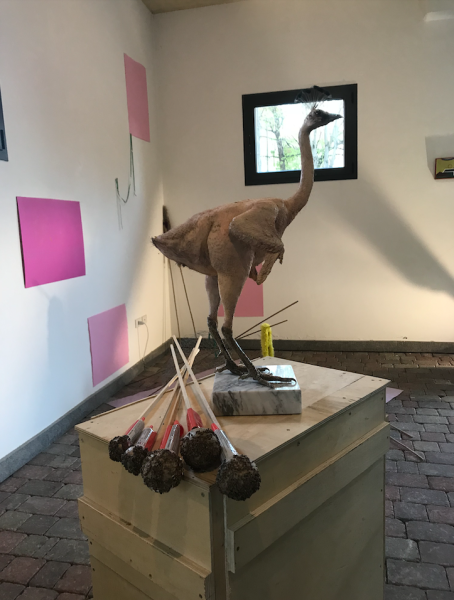
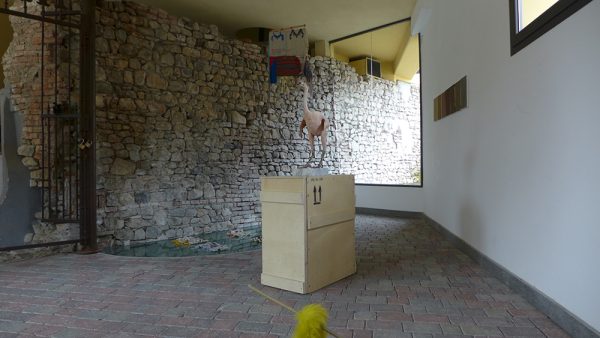
Apocalypse of the White Elephant Timisoara 2021
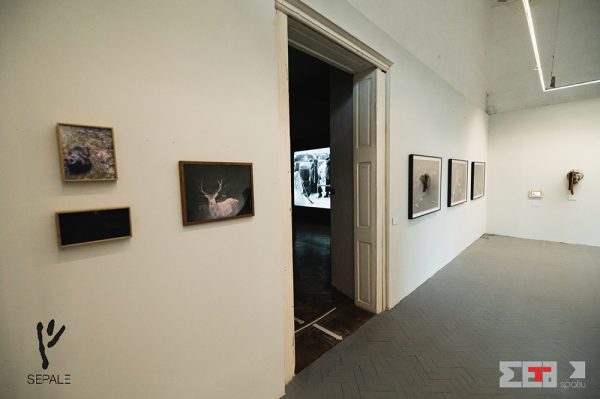
Solo Show @ Jan Arnold Gallery Vienna
Trauma DG Kunstraum München 2021
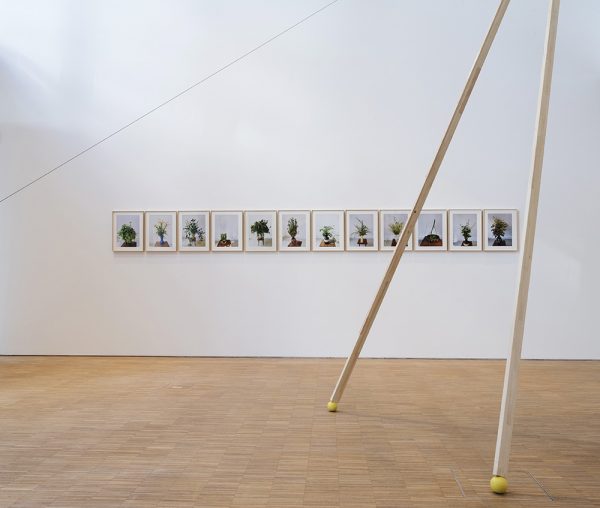
WITTGENSTEIN with Agnes Hamvas
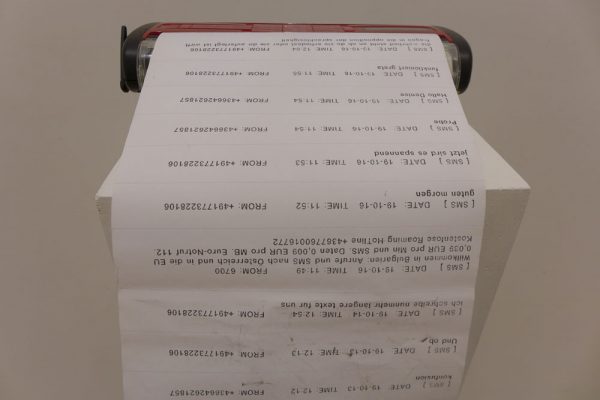
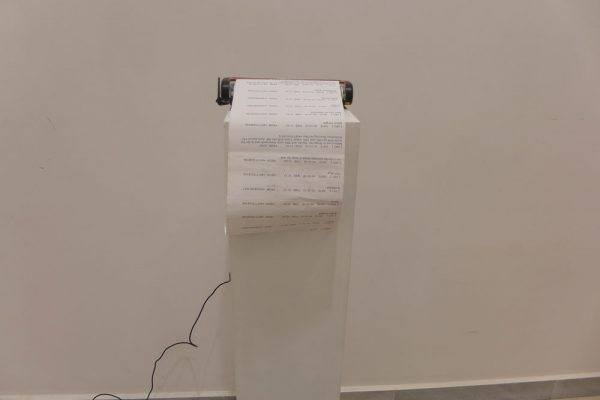
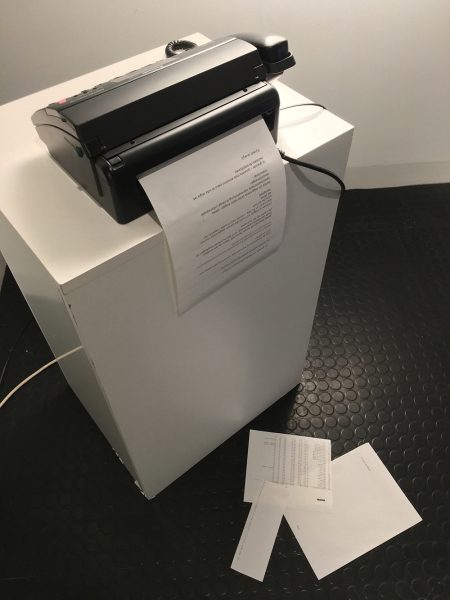
Haus Wittgenstein Vienna 2018, Veliko Tranvo Bulgarien 2019, Podroom Beograd 2020, Castelnuovo 2021
Balkan Performance Tour with Agnes Hamvas
Budapest-Belgrad-Zagreb-Ljubljana-Timisoara-Vienna
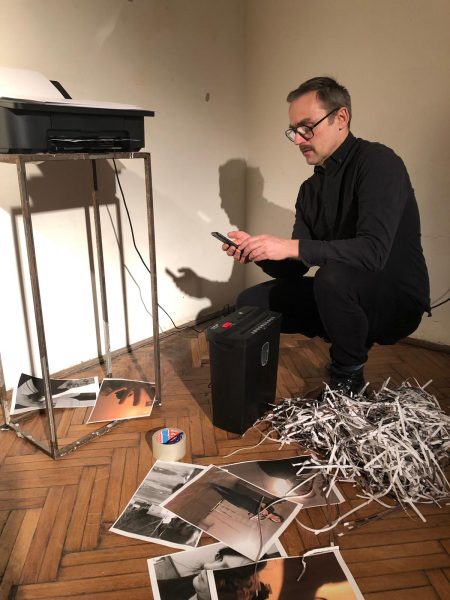
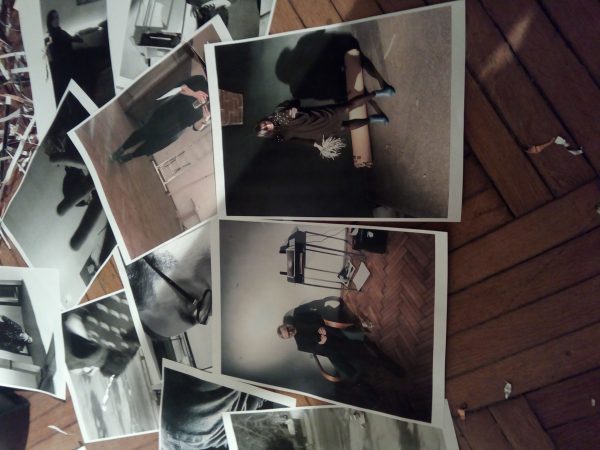
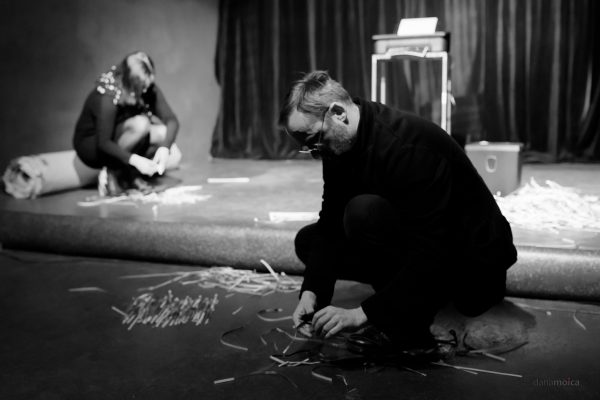
Photo: Dana Moica
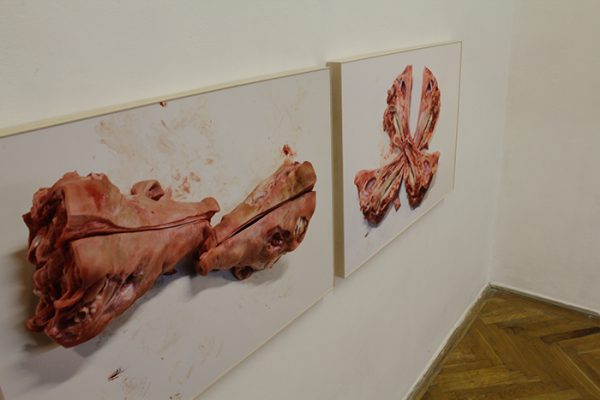
KISS KISS Photography
Knoll Galerie Budapest 2017
Curriculum Vita
geb. 18. August 1975 in Bruck / Mur – Österreich
Schule für künstlerische Fotografe (Friedl Kubelka) – Wien Gärtner /// Florist /// Floristikmeister (Olaf Schrörs) – Straubing
Ausstellungen (Auswahl) Solo-Ausstellungen mit *** versehen
2026 Behind the Pavilion (wT), SoloShow at Meta Spatiu/Timisoara
2025 Foto Wien, Palais Brambilla
2024 Complex Planet, Noyes Museum (New Jersy) /// overrun, Hotel Pupik, (Scheifling) /// capreoluscapreolus, Echoraum (Wien) /// sweet amaryllis, Valie EXPORT Kubus (Wien) /// Avoiding Memories, Meta Statiu (Temeswar)
2023 Trauma der Körper vergisst nicht, CRAC Galerie (Castelnuovo) /// Luce transformacione della rinascita, Villa Farsetti (Mestre) /// i can help you, on space (Wien) /// Trauma der Körper vergisst nicht, Monolog Galerie (Belgrad) /// overrun Q202 @ OnaB (Wien) /// Complex Planet, MAAC (Guayaquil)
2022 overrun+ Jan Arnold Galerie (Wien)*** /// PhotoGraz selection IV, Muzej Likovnih Umjetnosti (Osijek) /// CITYPARK (Graz) Cultural Station Svilara (Novi Sad) Fotogalerija STOLP (Maribor) /// PhotoGraz (Leibnitz) // a portrait of the artist as a young man*women, Fotogalerie im Grazer Rathaus (Graz) /// MUME Festival der Platane, Intervention im öffentlichen Raum (Wien)
2021 resnatura, Hassman&Liebfrau (Wien) /// Heaven, 12-14contemporary (Wien) /// PhotoGraz (Leibnitz) /// Apocalipsa elefantului alb, Garnizoana (Temeswar) /// Wittgenstein, Castelnuovo (Modena) /// PhotoGraz selection IV, Galerie Zuccato (Porec) /// Trauma der Körper vergisst nicht, DG Kunstraum (München)
kuratiert; von Nast zu Loytfed, 12-14contemporary ( Wien)
2020 overrun, Kunst im öffentlichen Raum Intervention (Hamburg)*** /// Wittgenstein, Podroom (Belgrad) /// Wittgenstein, aqb (Budapest) /// Transport, 12-14contemporary (Wien) ///kuratiert; DesOrientierung, 12-14contemporay (Wien) usw.
Förderungen / Sammlungen
Ankauf Sammlung der neuen Galerie Graz /// AIR – NRW Kunststiftung Reelkirchen /// Artist in Residence in Hamburg Achterhaus /// Artist in Residence in Schöppingen NRW /// Kulturabteilung Steiermark für ARCUB Bukarest /// Florian Werner Collection /// Sammlung Kleinsasserhof /// Atelierförderpreis der Stadt München /// AIR Arlberg Hospiz Residence /// Rotary Kunstauktion 2014 /// Bayerischer Atelierförderpreis für Bildende KünstlerInnen /// Lfa Förderbank Bayern & Kulturabteilung Steiermark – Katalogförderung /// Artist in Residence in Judenburg /// Sammlung Stadt Graz „Rabies in Space“ /// uvm.
hubert_hasler@gmx.de huberthasler @instagram
Josefstädterstrasse 1080 Wien
+43 681 81327902 +49 177 3228106